

Rising Satellite Count Challenges Space Telescope Observations

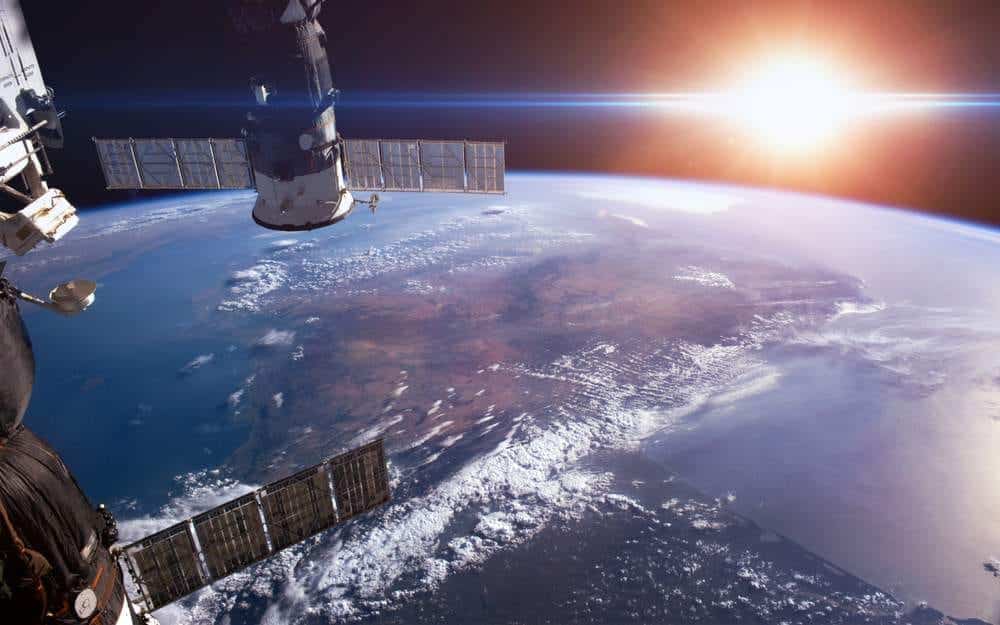
One of the key challenges facing astronomers today is the increasing number of satellites in low-Earth orbit, which is beginning to interfere with both ground-based and space telescopes. A recent study published in the journal Nature highlights the potential for significant disruptions to astronomical observations due to the growing presence of satellite constellations, particularly those from SpaceX’s Starlink. As the number of satellites continues to rise, experts warn that the clarity of images captured by telescopes could be severely compromised in the near future.
Explosive Growth of Satellite Constellations
The surge in satellite numbers is staggering. In 2018, there were approximately 2,000 satellites orbiting Earth. Today, that figure has skyrocketed to over 9,000, primarily due to SpaceX’s Starlink internet satellites. The company has ambitious plans, having filed paperwork to launch as many as 42,000 satellites. Other companies, including OneWeb, Amazon, and Qianfan, are also developing their own mega-constellations. According to Dr. Alejandro Borlaff and his team at NASA’s Ames Research Centre, the total number of satellites in low-Earth orbit could reach around half a million by 2040. This rapid expansion poses a significant threat to astronomical observations, as the satellites reflect sunlight, creating streaks that can contaminate images captured by telescopes.
Impact on Space Telescopes
Dr. Borlaff’s research focused on how these mega-constellations might affect four specific space telescopes: NASA’s Hubble Space Telescope and SPHEREx, China’s upcoming Xuntian telescope, and the European Space Agency’s ARRAKIHS instrument. The study utilized computer simulations to analyze the potential interference from satellites based on their size and orbits. The findings were alarming; approximately one-third of Hubble’s images could be impacted. However, the situation is even more dire for SPHEREx, ARRAKIHS, and Xuntian, with projections indicating that up to 96% of their exposures could be contaminated by satellite streaks. This could result in an average of 5.6, 69, and 92 streaks per image, respectively, severely hampering the quality of astronomical data.
Possible Solutions and Challenges
In response to these challenges, SpaceX has attempted to reduce the reflectivity of its satellites, but the results have been limited. The company faces business pressures that often lead to larger, brighter satellites, which exacerbate the issue. While coordination and data-sharing among astronomers and satellite operators could help mitigate interference, this approach has its limitations. As the number of satellites increases, it becomes increasingly difficult to avoid their paths.
One potential solution is to launch future space telescopes into higher orbits, beyond the reach of the growing satellite swarms. The James Webb Space Telescope, for example, operates at a distance of 1.5 million kilometers from Earth, well above the low-flying satellites. However, lower orbits have advantages, such as better shielding from cosmic rays and easier data transmission.
The Role of Diplomacy and Regulation
Dr. Borlaff emphasizes the importance of diplomacy and regulation in addressing the challenges posed by satellite constellations. He draws parallels to the Montreal Protocol, which successfully curbed the use of ozone-depleting chemicals. In 2022, the International Astronomical Union established the Centre for the Protection of the Dark and Quiet Sky from Satellite Constellation Interference. This organization aims to facilitate dialogue between astronomers and satellite operators to find workable compromises, such as limiting the number of satellites or adjusting their orbits. As the commercial and international space race intensifies, the task of balancing these interests will be increasingly complex.
Observer Voice is the one stop site for National, International news, Sports, Editor’s Choice, Art/culture contents, Quotes and much more. We also cover historical contents. Historical contents includes World History, Indian History, and what happened today. The website also covers Entertainment across the India and World.

