

Reflecting on 25 Years of the India vs Australia Test at Eden Gardens: The Legacy of the Follow-On Rule

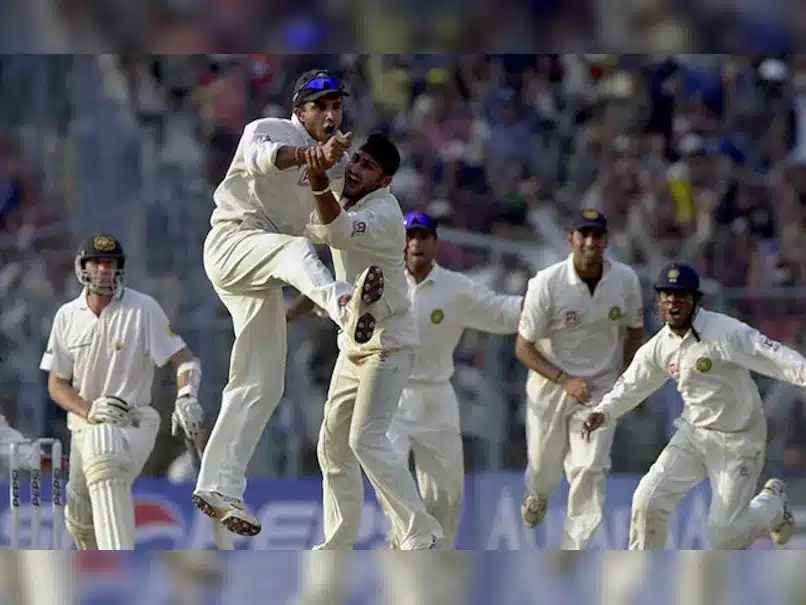
When Steve Waugh’s Australian cricket team arrived in India, they were riding high on a 15-match winning streak, which soon became 16 after a commanding 10-wicket victory at Wankhede Stadium. However, the second Test at Eden Gardens in Kolkata proved to be a turning point, as India, facing a daunting first-innings deficit, was bowled out for just 171 in response to Australia’s 445. The decision not to enforce the follow-on by Waugh has since sparked debate, particularly given the subsequent dramatic turnaround in the match, culminating in India’s remarkable victory.
The Context of the Series
Australia entered the second Test with a significant psychological advantage, having dominated the first match. With a lead of 274 runs after India’s first innings, the Australian bowlers, including legends Glenn McGrath, Shane Warne, Jason Gillespie, and Michael Kasprowicz, were poised to capitalize on India’s faltering confidence. Despite the favorable conditions and a relatively fresh bowling attack, Waugh faced a critical decision regarding whether to enforce the follow-on. Warne later expressed his concerns about the decision, noting the extreme heat and the potential deterioration of the pitch, which could have influenced the match’s outcome had Australia batted again.
The Follow-On Decision
The follow-on decision has been a topic of contention among cricket analysts and players alike. Waugh, who opted not to enforce it, has remained unapologetic, asserting that his team played with a positive mindset. He believed in their ability to win without the follow-on, a strategy that was common at the time. However, Warne and former coach John Buchanan have since reflected on the decision as a tactical misstep. The match’s outcome, marked by India’s stunning comeback led by VVS Laxman and Rahul Dravid, has since reshaped perceptions of the follow-on strategy in cricket.
The Impact of the Eden Gardens Test
The Eden Gardens Test is often cited as a pivotal moment in cricket history, altering the conventional wisdom surrounding the follow-on. Before this match, enforcing the follow-on with a substantial lead was a standard aggressive tactic. However, India’s remarkable 376-run partnership between Laxman and Dravid demonstrated that even the most formidable bowling attacks could be neutralized. This match not only shifted the momentum of the series but also highlighted the psychological aspects of cricket, where a team’s confidence can significantly impact performance.
Modern Perspectives on the Follow-On
In contemporary cricket, the approach to the follow-on has evolved. Captains are now more cautious, often opting to bat again to protect their bowlers from fatigue and injury risks. This shift is evident in recent matches, such as when India faced the West Indies, where captain Shubman Gill enforced the follow-on despite his bowlers’ heavy workload. The decision led to a lengthy second innings for the West Indies, ultimately resulting in a comfortable chase for India but raising questions about the toll on the bowlers. Interestingly, statistics still favor the follow-on, with a high success rate since the 2001 Eden Gardens Test. Waugh’s decision may have faced criticism, but his subsequent enforcement of the follow-on in later matches yielded consistent victories, underscoring the complexity of this tactical choice in cricket.
Observer Voice is the one stop site for National, International news, Sports, Editor’s Choice, Art/culture contents, Quotes and much more. We also cover historical contents. Historical contents includes World History, Indian History, and what happened today. The website also covers Entertainment across the India and World.
Follow Us on Twitter, Instagram, Facebook, & LinkedIn

