

New Measures Aim to Curb Wheat Stubble Burning in Northern States

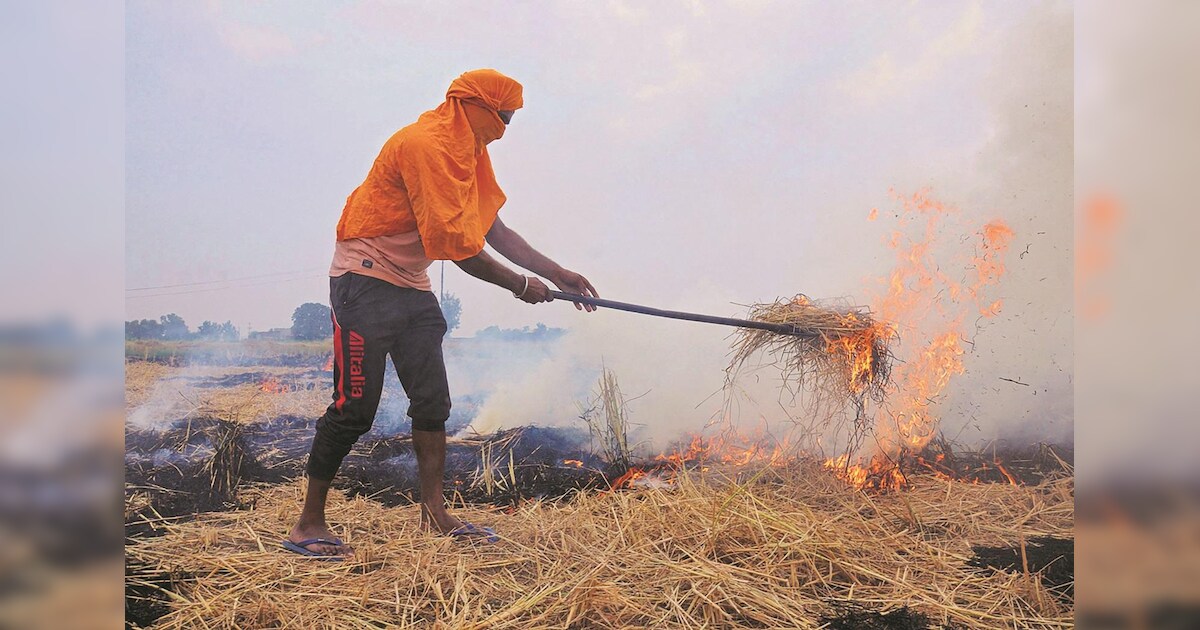
In a bid to tackle the persistent issue of air pollution in Northern India, the Commission for Air Quality Management in NCR and Adjoining Areas (CAQM) has rolled out a Statutory Direction aimed at curbing wheat stubble burning during the 2026 harvesting season. This directive targets the state governments of Punjab, Haryana, and Uttar Pradesh, with collaborative efforts anticipated from Delhi and Rajasthan.
The CAQM has identified that the burning of agricultural residues significantly contributes to air quality degradation in both local and neighboring regions. Recent satellite data from ISRO/IARI showcased alarming figures during the wheat harvesting season from April 1 to May 31, 2025, with Punjab reporting 10,207 fire incidents, Haryana 1,832, and Uttar Pradesh with 259. These figures underline the urgent need for targeted interventions specifically tailored for the wheat harvesting period.
Framework for Action Against Stubble Burning
To guide the concerned states, the Commission has established a broad Framework aimed at controlling and ultimately eliminating crop residue burning. Detailed State-specific Action Plans have been called for, with Punjab, Haryana, and Uttar Pradesh presenting their strategies in recent meetings held by the Commission. The Commission has urged these states to refine their action plans to enhance their effectiveness.
Action Plans Implemented with Specific Measures
Through Direction No. 96, the CAQM instructed the respective state governments to take decisive steps towards the elimination of wheat stubble burning. Key directives include:
- Implementing the State Action Plans diligently to eliminate wheat stubble burning.
- Mapping all farms to assess proposed wheat stubble management strategies, including crop diversification and in-situ management.
- Assigning nodal officers to groups of farmers for effective monitoring, with a maximum of 100 farmers per officer.
- Ensuring timely access to Crop Residue Management (CRM) machines for farmers during peak harvesting seasons, facilitated through a mobile application.
- Providing rent-free access to CRM machines for small and marginal farmers.
- Establishing adequate storage facilities for wheat straw to minimize fire losses.
- Formulating a District Level Supply Chain Management Plan for the effective distribution of wheat straw throughout the year.
- Constituting a dedicated ‘Parali Protection Force’ at the district and block levels to monitor and prevent open stubble burning.
- Intensifying patrolling by enforcement agencies during late hours to deter stubble burning activities.
- Implementing a suitable environmental compensation mechanism.
- Conducting extensive information, education, and communication campaigns to raise awareness about the adverse effects of stubble burning and promote best practices among farmers.
Additionally, the governments of Delhi and Rajasthan have been encouraged to proactively eliminate stubble burning incidents in the upcoming harvesting season. Continuous monitoring will be ensured as states submit monthly progress reports to the Commission for ongoing assessment and necessary interventions.
Observer Voice is the one stop site for National, International news, Sports, Editor’s Choice, Art/culture contents, Quotes and much more. We also cover historical contents. Historical contents includes World History, Indian History, and what happened today. The website also covers Entertainment across the India and World.
Follow Us on Twitter, Instagram, Facebook, & LinkedIn

