

IMD Enhances Weather Monitoring with New Technology

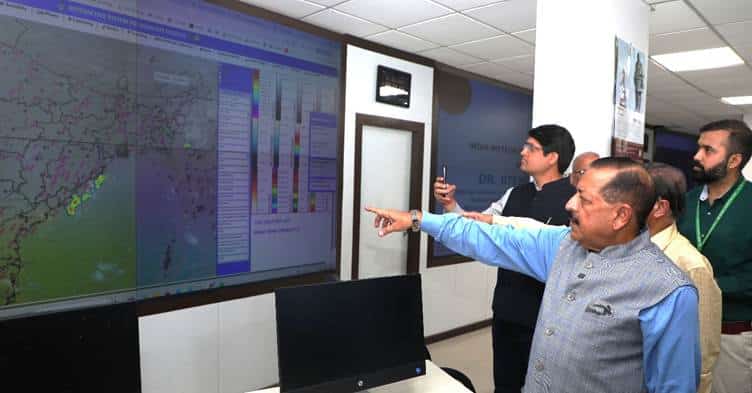
The Indian Meteorological Department (IMD) is revolutionizing weather forecasting and early warning systems through innovative technologies and improved infrastructure. This new focus aims to offer timely alerts for extreme weather events, ensuring that the public and stakeholders are better informed and prepared. The IMD’s ongoing enhancement of observational capabilities and research infrastructure is central to achieving higher accuracy in weather predictions across the country.
Mission Mausam: A Game Changer in Weather Forecasting
Among the significant initiatives launched by the government is the implementation of Mission Mausam, which has already resulted in the installation of several Doppler Weather Radars (DWRs). Currently, there are 47 operational radars, covering 87% of India’s land area. Further installations are on the horizon to fill remaining gaps, enhance redundancy, and replace outdated radars. An innovative component of Mission Mausam is the Bharat Forecast System (BharatFS), which boasts an advanced weather forecasting model capable of providing detailed rainfall predictions for up to 10 days, formulated at a high spatial resolution of 6 km. This level of detail allows predictions to be made at the panchayat level, significantly empowering local responses.
Advanced Early Warning Systems
The IMD has developed a real-time Decision Support System (DSS) that integrates various data sources for a comprehensive early warning system (EWS). This system enables effective monitoring and timely dissemination of crucial information about extreme weather events—such as heavy rainfall and droughts—suggesting specific actions at the district and city levels. Additionally, the organization maintains Meteorological Centres in each state, including dedicated Cyclone Warning Centres that operate continuously during critical weather patterns.
Improved Communication Channels for Warnings
With recent advancements, the forecasting skill for severe weather events has improved by 30-40% within the last decade. The IMD ensures that warnings are effectively communicated to the public through multiple platforms, including its website, mobile apps, SMS, and social media channels like YouTube, Facebook, X, and Instagram. The National Disaster Management Authority’s (NDMA) Common Alert Protocol (CAP) is also being utilized for streamlined dissemination of warnings.
At Your Fingertips: IMD’s Weather Apps
The IMD has launched various mobile applications to facilitate access to weather-related information, including the MAUSAM App for forecasting, the MEGHDOOT App for agricultural services, the DAMINI App for lightning alerts, and the UMANG App for comprehensive weather warnings. These tools empower users to stay informed about changing weather patterns.
As the IMD continues to modernize its monitoring and early warning systems, it actively works to mitigate the impact of increasingly frequent extreme weather events exacerbated by climate change. These recent efforts signify a strong commitment to improving public safety and resilience against natural hazards.
Observer Voice is the one stop site for National, International news, Sports, Editor’s Choice, Art/culture contents, Quotes and much more. We also cover historical contents. Historical contents includes World History, Indian History, and what happened today. The website also covers Entertainment across the India and World.

