

Humanoid Robots Outpace Humans in Beijing Half-Marathon, Highlighting Technological Progress

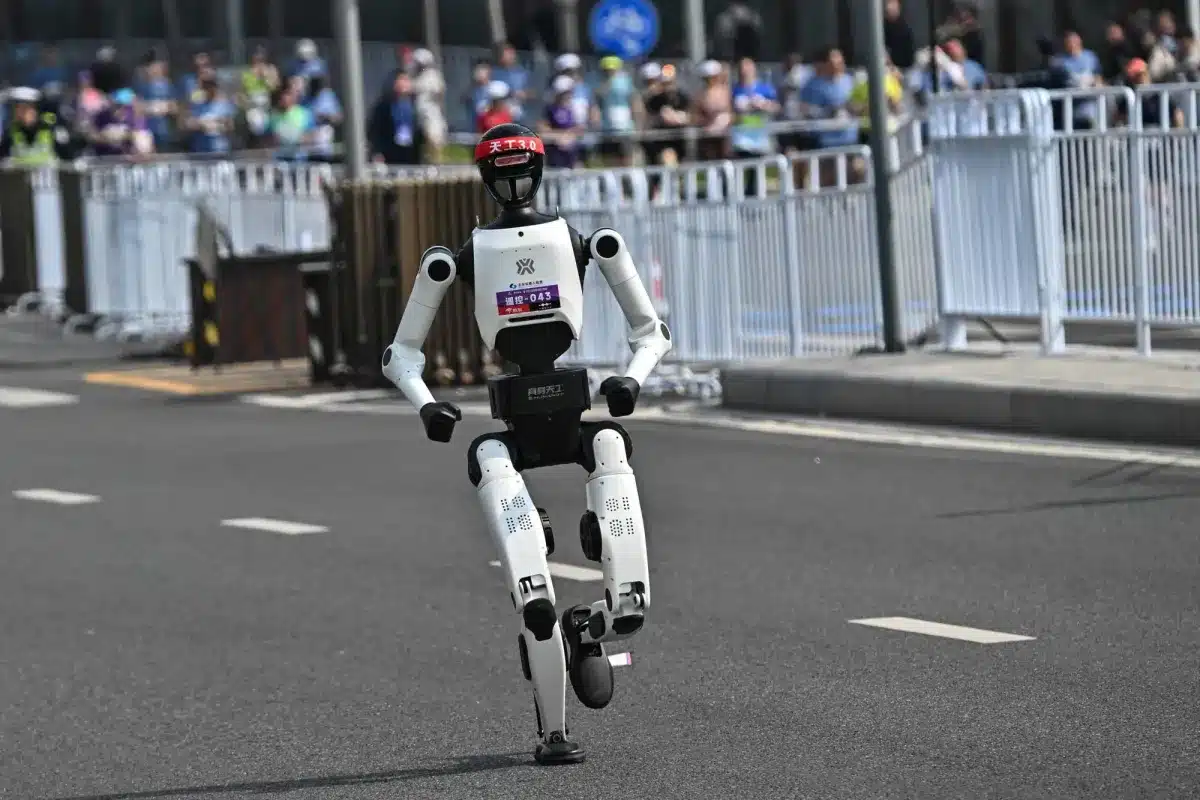
Dozens of Chinese-made humanoid robots showcased their remarkable athleticism and autonomous navigation skills during a half-marathon in Beijing on Sunday. This event highlighted the rapid advancements in robotics technology, with many robots outpacing human runners. The contrast between this year’s race and last year’s inaugural event was striking, as the number of participating teams surged and robots demonstrated improved performance, marking a significant leap in the field of robotics.
Significant Improvements in Robot Performance
The second edition of the Beijing E-Town Half Marathon and Humanoid Robot Half Marathon saw a dramatic increase in participation, with over 100 teams competing compared to just 20 last year. The improvements were evident, as several robot frontrunners finished the race faster than professional athletes, beating human winners by more than 10 minutes. The winning robot, developed by the Chinese smartphone brand Honor, completed the 21-kilometer race in an impressive 50 minutes and 26 seconds, surpassing the half-marathon world record recently set by Ugandan runner Jacob Kiplimo.
Unlike the previous year, when most robots struggled to finish, nearly half of this year’s entrants navigated the challenging terrain autonomously, showcasing their advanced capabilities. The robots raced alongside 12,000 human participants on separate tracks to prevent collisions, emphasizing the integration of robotics into competitive sports. Du Xiaodi, an engineer from Honor, noted that their robot was designed to mimic elite human runners, featuring legs measuring 90 to 95 cm and utilizing liquid cooling technology.
Public Fascination with Robotics
The event captivated spectators, who marveled at the diverse array of humanoid robots displaying various sizes and gaits. Many attendees, including engineering students and young aspiring robotics enthusiasts, expressed their admiration for the robots’ performance. Chu Tianqi, a 23-year-old engineering student, remarked on the impressive running posture of the humanoids, highlighting the rapid development of artificial intelligence. He emphasized the importance of embracing AI technology, warning that those resistant to it may find themselves left behind in the future.
Young schoolboy Guo Yukun, inspired by the race, expressed his desire to pursue a degree in robotics. Currently enrolled in robotics theory and programming classes, Guo is also part of his school’s team for the International Olympiad in Informatics, showcasing the growing interest in robotics education among youth.
Challenges in Commercial Applications
Despite the impressive display of physical prowess during the half-marathon, the practical applications of humanoid robots remain largely in the experimental stage. Experts caution that while the robots demonstrated remarkable skills, these do not necessarily translate to commercial viability in industrial settings. The ability to perform complex tasks requiring manual dexterity and real-world perception is still a significant hurdle for Chinese robotics firms.
China is actively pursuing a leadership position in the robotics industry, implementing various policies to support local companies. The government has introduced subsidies and infrastructure projects aimed at fostering innovation in this sector. Additionally, the annual CCTV Spring Festival gala showcased China’s ambitions in humanoid robotics, featuring a martial arts demonstration with Unitree humanoids performing intricate sequences alongside human performers, further highlighting the nation’s commitment to advancing robotics technology.
Observer Voice is the one stop site for National, International news, Sports, Editor’s Choice, Art/culture contents, Quotes and much more. We also cover historical contents. Historical contents includes World History, Indian History, and what happened today. The website also covers Entertainment across the India and World.

