

F. Scott Fitzgerald: Chronicler of the Jazz Age

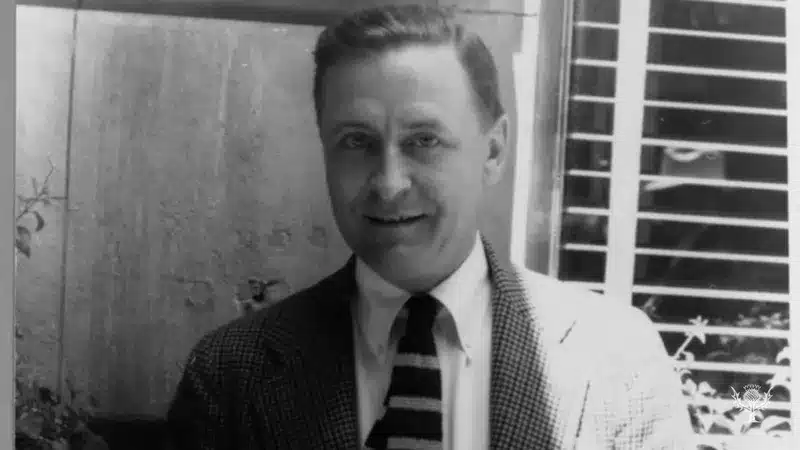
F. Scott Fitzgerald (September 24, 1896 – December 21, 1940) was an American novelist, essayist, and short story writer. He popularized the term “Jazz Age” through his works and is now regarded as one of the greatest American writers of the 20th century, though critical acclaim came only after his death.
Early Life and Education
Fitzgerald was born in Saint Paul, Minnesota, to a middle-class Catholic family. He was named after Francis Scott Key, a distant cousin who wrote the lyrics to “The Star-Spangled Banner.” His mother, Mary McQuillan Fitzgerald, was the daughter of an Irish immigrant who became wealthy as a wholesale grocer. His father, Edward Fitzgerald, descended from Irish and English ancestry and had moved to Minnesota from Maryland after the Civil War to start a wicker-furniture business.
When Fitzgerald was one year old, his father’s business failed, and the family relocated to Buffalo, New York, where his father took a job as a salesman for Procter & Gamble. Fitzgerald spent his early childhood in Buffalo and briefly in Syracuse, attending Holy Angels Convent and then Nardin Academy. After Procter & Gamble fired his father in 1908, the family returned to Saint Paul. His mother’s inheritance sustained their middle-class standing during this period. Fitzgerald attended St. Paul Academy from 1908 to 1911, publishing his first piece of fiction in the school newspaper at age 13. In 1911, his parents sent him to the Newman School, a Catholic prep school in Hackensack, New Jersey, where Father Sigourney Fay encouraged his literary ambitions.
Fitzgerald enrolled at Princeton University after graduating from Newman in 1913, becoming one of the few Catholics in the student body. He formed lasting friendships with classmates Edmund Wilson and John Peale Bishop, both of whom later aided his literary career. He wrote stories and poems for the Princeton Triangle Club, the Princeton Tiger, and the Nassau Lit.
Career and Achievements
During his sophomore year at Princeton, Fitzgerald developed a romantic relationship with Chicago socialite Ginevra King, though she ultimately rejected his marriage proposal due to his lack of financial prospects. He dropped out of Princeton in 1917 to join the Army during World War I. While stationed in Alabama, he met Zelda Sayre, a Southern debutante from Montgomery’s exclusive country-club set. After Fitzgerald published This Side of Paradise in 1920, a commercially successful novel that became a cultural sensation, Zelda agreed to marry him.
His second novel, The Beautiful and Damned (1922), further elevated his status among the cultural elite. To maintain an affluent lifestyle, Fitzgerald wrote numerous stories for popular magazines including The Saturday Evening Post, Collier’s Weekly, and Esquire. During this period, he frequented Europe, where he befriended modernist writers and artists of the “Lost Generation” expatriate community, including Ernest Hemingway.
Fitzgerald published The Great Gatsby in 1925. Though it received generally favorable reviews, the novel was a commercial failure, selling fewer than 23,000 copies in its first year. Despite this initial reception, some literary critics have since hailed it as the “Great American Novel.” His fourth and final completed novel, Tender Is the Night (1934), was written following the deterioration of his wife Zelda’s mental health and her placement in a mental institution for schizophrenia.
During the Great Depression, Fitzgerald’s works declined in popularity, creating financial strain. He moved to Hollywood to pursue screenwriting, an effort that proved unsuccessful. While in Hollywood, he cohabited with columnist Sheilah Graham. Fitzgerald struggled with alcoholism throughout his life and achieved sobriety only briefly before his death.
Notable Events and Milestones
Fitzgerald’s career was marked by a stark contrast between commercial success and critical recognition. This Side of Paradise (1920) established him as a prominent voice of the 1920s, while The Beautiful and Damned (1922) cemented his position in the cultural elite. The Great Gatsby (1925) represented a turning point—though it failed commercially at the time, it would eventually be recognized as a masterwork. His short story collection Tales of the Jazz Age popularized the term “Jazz Age” itself, a phrase now synonymous with the 1920s.
Over his lifetime, Fitzgerald published four novels, four story collections, and 164 short stories. He achieved transient success and fortune in the 1920s but did not receive sustained critical acclaim until after his death on December 21, 1940, at age 44 from a heart attack.
Awards and Honors
Fitzgerald did not receive major literary awards during his lifetime. His critical rehabilitation and recognition as one of the greatest American writers of the 20th century occurred posthumously. His friend Edmund Wilson edited and published the unfinished novel The Last Tycoon in 1941, further solidifying Fitzgerald’s legacy.
Additional Resources
Fitzgerald’s life and work continue to attract scholarly attention and popular interest. Readers seeking deeper exploration of his biography, literary analysis, and historical context can find extensive resources through Wikipedia, academic literary journals, and biographical archives dedicated to early 20th-century American literature.
Observer Voice is the one stop site for National, International news, Sports, Editor’s Choice, Art/culture contents, Quotes and much more. We also cover historical contents. Historical contents includes World History, Indian History, and what happened today. The website also covers Entertainment across the India and World.
Follow Us on Twitter, Instagram, Facebook, & LinkedIn

