

Donald Trump’s Venezuela Strategy Poses Challenges for China’s Ambitions

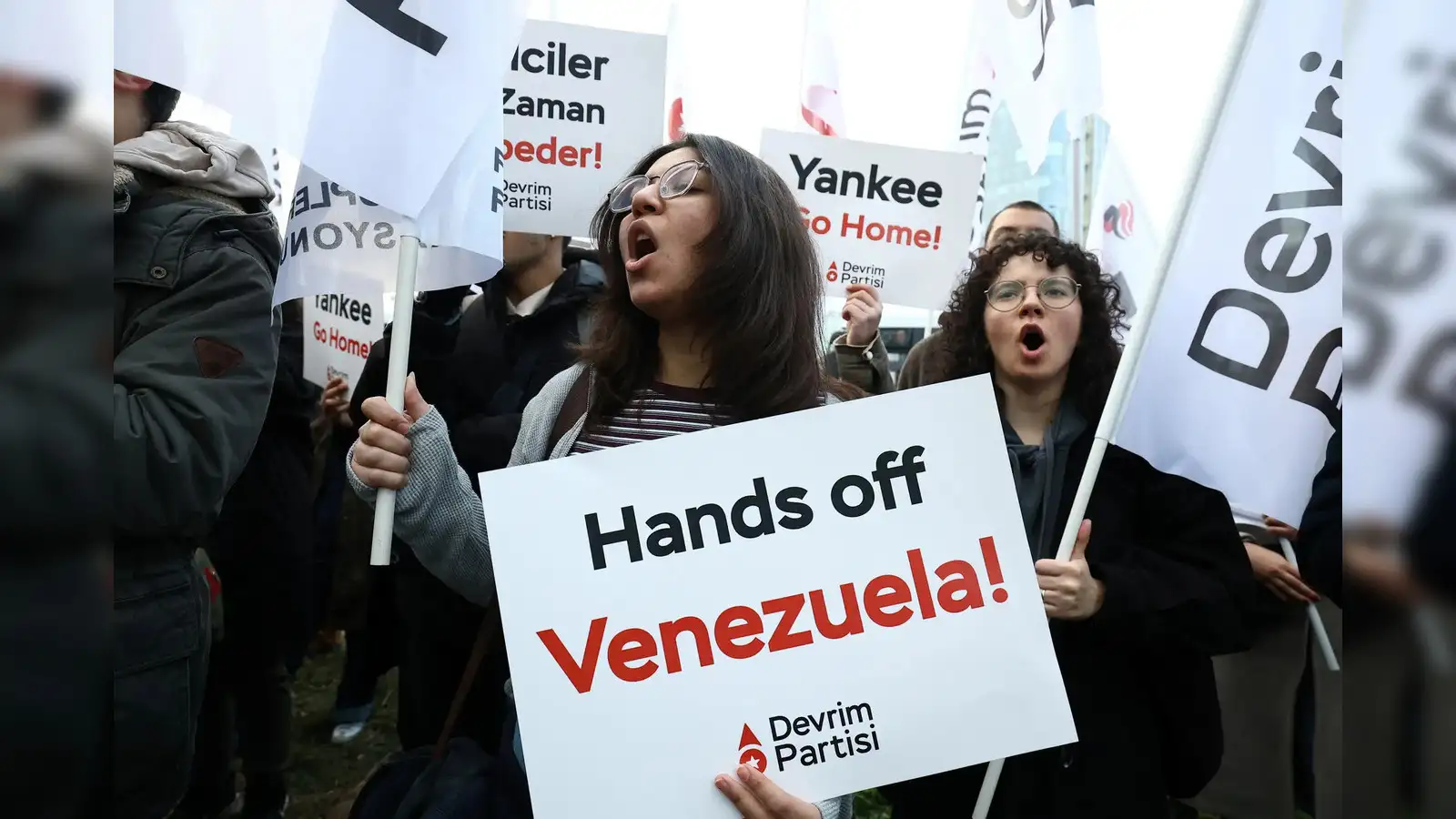
It took mere hours for Donald Trump to disrupt a longstanding relationship that China had carefully nurtured with Venezuela. Just before Venezuelan President Nicolás Maduro was apprehended in a nighttime raid, he praised Chinese leader Xi Jinping as a significant global figure during a meeting with Chinese diplomats. This unexpected turn of events has left China grappling with the implications for its investments in Venezuela and its broader strategy in South America, as it navigates an increasingly unpredictable geopolitical landscape.
China’s Investment in Venezuela
China has invested over $100 billion in Venezuela since the early 2000s, focusing on infrastructure projects such as railways and power plants. In return, Venezuela has supplied China with oil, which is crucial for fueling its economy. Last year, approximately 80% of Venezuelan oil exports went to China, although this only accounted for about 4% of China’s total oil imports. The relationship has been mutually beneficial, but the recent upheaval raises concerns about the stability of these investments. Experts warn that the chaos resulting from Maduro’s arrest could jeopardize Chinese assets in Venezuela, particularly if the U.S. exerts influence over the situation.
Chinese firms like CNPC and Sinopec are major players in Venezuela’s oil sector, and there are fears that these assets could be nationalized or marginalized amid the turmoil. Additionally, Venezuela owes around $10 billion to Chinese creditors, but the risk to these investments remains uncertain. Analysts suggest that future Chinese investments in Venezuela may be deterred by the potential for U.S. intervention, prompting a reassessment of risks associated with the region.
Beijing’s Strategic Calculations
In light of the recent developments, Beijing is likely to proceed with caution. While it condemns the U.S. actions as violations of international law, it must also consider its strategic interests in South America. The Chinese government has historically favored a long-term approach, but the unpredictability of Trump’s administration complicates its calculations. The recent U.S. actions in Venezuela may reinforce China’s suspicions about American intentions in the region, raising questions about how far the U.S. will go to limit Chinese influence.
U.S. Secretary of State Marco Rubio emphasized that the Western Hemisphere is a priority for the U.S., signaling a clear message to China to limit its presence in the region. This situation poses a challenge for China, which has worked diligently to establish itself as a key player in Latin America. The potential for increased U.S. intervention could lead other South American nations to reconsider their relationships with China, fearing unwanted attention from Washington.
The Broader Implications for China
China’s response to the situation in Venezuela may also have implications for its approach to Taiwan. Some analysts speculate that Beijing could be observing the U.S. actions in Caracas as a potential precedent for its own ambitions regarding Taiwan, which it views as a breakaway province. However, experts caution that any move to assert control over Taiwan would not be directly influenced by U.S. actions in Venezuela. Instead, Beijing’s strategy towards Taiwan is likely to remain focused on coercion and negotiation rather than outright military action.
The ongoing tensions between the U.S. and China highlight the delicate balance Beijing must strike in maintaining its influence in Latin America while navigating a complex relationship with Washington. The stakes are high, as the region is vital for China’s access to food, energy, and natural resources. The U.S. has made it clear that it seeks to limit Chinese investments in critical areas, such as the Panama Canal, further complicating China’s position.
China’s Long-Term Strategy in the Global South
Despite the challenges posed by the recent developments in Venezuela, China has shown resilience in its efforts to strengthen ties with South American nations. The Chinese government has consistently promoted a narrative of shared interests and opposition to unilateral actions by Western powers. This message resonates with countries that are wary of U.S. influence, particularly under Trump’s administration.
Over the past two decades, China has successfully persuaded several Latin American countries to switch diplomatic recognition from Taiwan to Beijing, enhancing its strategic partnerships in the region. In contrast, the volatility of U.S. relations under Trump may play into China’s hands, as it seeks to position Xi Jinping as a stable leader amid global uncertainty. However, the situation in Venezuela serves as a reminder of the risks involved in international relations, and Beijing’s long-term plans may be challenged by the unpredictable nature of geopolitical dynamics.
Observer Voice is the one stop site for National, International news, Sports, Editor’s Choice, Art/culture contents, Quotes and much more. We also cover historical contents. Historical contents includes World History, Indian History, and what happened today. The website also covers Entertainment across the India and World.
Follow Us on Twitter, Instagram, Facebook, & LinkedIn

