

Ancient Climate Shift Reveals Monsoon Weakening in India

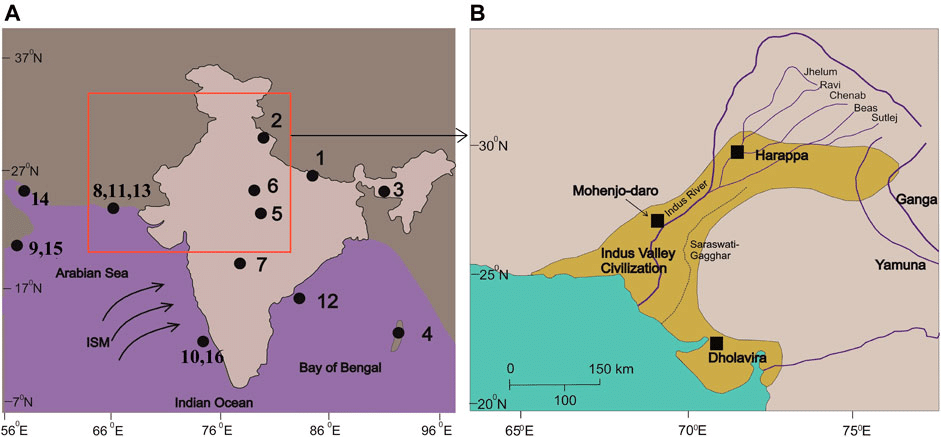
Scientists have unveiled how a dramatic temperature drop in Canada approximately 8,200 years ago significantly affected the Indian Summer Monsoons. This phenomenon, termed the “8.2 ka cooling event,” is noted as the most significant climate variation of the Holocene, highlighting the interconnectedness of global weather patterns.
During this event, temperatures in Greenland plummeted by 3 ºC and methane levels fell sharply by 80 ppbv. Researchers suggest this change had profound implications for the hydrologic cycle, as the sudden influx of freshwater from melting glaciers, particularly from Lake Agassiz into the North Atlantic, played a crucial role.
New Insights from India’s Core Monsoon Zone
A team from the Birbal Sahni Institute of Palaeosciences (BSIP) has discovered traces of this abrupt climate shift within India’s Core Monsoon Zone (CMZ). Their findings, published in the journal Quaternary International, utilized a sediment profile extracted from Tuman Lake in Korba District, Chhattisgarh, to analyze fossil pollen preserved in the lake’s sediments. This method allowed researchers to create a high-resolution climate archive based on microscopic grains of pollen.
In their analysis, researchers identified and counted 300 types of terrestrial pollen grains per sample, enabling them to reconstruct historical vegetation patterns and climate conditions. This approach demonstrated that the increased presence of tropical moist deciduous forest pollen corresponded to stronger monsoon rainfall, while drier or herbaceous pollen indicated weaker rainy seasons, particularly during the cooling event.
Link Between North Atlantic and Indian Monsoons
The results indicate a significant weakening of monsoon activity during the 8.2 ka interval. The research further suggests a powerful teleconnection—a complex atmospheric and oceanic link between the North Atlantic region and the Indian Summer Monsoon. Cooling in Greenland likely disrupted Atlantic circulation, which in turn altered global wind patterns and diminished rainfall in northern India.
This study not only sheds light on the historical climate dynamics but also emphasizes the sensitivity of India’s monsoon system to climatic shifts occurring in high-latitude oceans and the tropical Pacific. The timeline constructed by the team, extending back over 8,200 years, offers valuable insights into the interdependence of global weather systems.
Observer Voice is the one stop site for National, International news, Sports, Editor’s Choice, Art/culture contents, Quotes and much more. We also cover historical contents. Historical contents includes World History, Indian History, and what happened today. The website also covers Entertainment across the India and World.

