

National Consultation on Watershed Management to Boost Agricultural Resilience

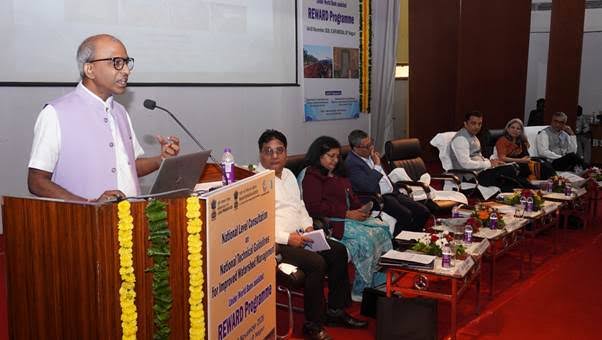
The Department of Land Resources (DoLR) and the National Rainfed Area Authority (NRAA) have launched a significant two-day consultation on the Draft National Technical Guidelines for Improved Watershed Management. Taking place in Nagpur on November 4-5, 2026, this event is part of the World Bank-supported “Rejuvenating Watersheds for Agricultural Resilience through Innovative Development (REWARD)” programme. The gathering aims to unite policymakers, experts, and stakeholders to enhance watershed development using scientific and participatory strategies.
The inaugural session was graced by notable figures, including Shri Dilip Kumar, Secretary of DoLR, and Dr. C.S. Kumar, CEO of NRAA, along with various senior officials and specialists in the field of agricultural development.
Emphasis on Practical Guidelines and Flexibility
During the opening remarks, Secretary Shri Dilip Kumar emphasized the urgent need for a balanced approach that merges scientific guidelines with practical execution in watershed development programmes. He cautioned against rigid frameworks that may hinder local implementations, advocating for flexibility that caters to state-level capacities and conditions.
Shri Kumar highlighted the necessity of efficient financial management, urging states to utilize allocated funds effectively and quickly. He reiterated that a unified set of core parameters should be adopted while allowing states the flexibility to incorporate additional local parameters based on their unique requirements.
Focus on Data and Technological Innovation
CEO Dr. C.S. Kumar pointed out the essential role of data accessibility and technical capacity-building for effective watershed programme implementation. He called for utilizing legacy datasets and fostering a harmonized national-level Decision Support System that would leverage successful models from states like Odisha and Karnataka.
Shri Nitin Khade, Joint Secretary of DoLR, further stressed the importance of timely finalization of the National Technical Guidelines. He highlighted that these guidelines will serve as a foundational framework for future watershed initiatives, aiming at building a drought-resilient India by 2047.
He also underscored the transformative potential of Land Resource Inventory (LRI) and scientific data in informing decisions related to soil and water conservation, crop patterns, and nutrient management through digital platforms.
Community Engagement and Project Implementation
Highlighting the significance of community participation, he advocated for the strengthening of Farmer Producer Organizations (FPOs) and Self-Help Groups (SHGs) to enhance livelihoods and improve access to markets. Moreover, fostering community ownership of water harvesting structures post-project was also emphasized, ensuring sustainability beyond funding periods.
Dr. N.G. Patil, Director of ICAR-NBSS&LUP, reiterated the need for a science-based approach to integrated watershed planning and landscape development.
As this consultation unfolds, diverse stakeholders, including state representatives, NGOs, and academic institutions are engaged in constructive dialogue on vital topics such as hydrological assessments and community participation. These discussions aim to finalize the guidelines under the REWARD programme and contribute to the development of the upcoming WDC-PMKSY 3.0 initiative, which seeks to promote scalable and participatory watershed management across India.

