

Thaddeus Stevens: Radical Republican and Abolitionist

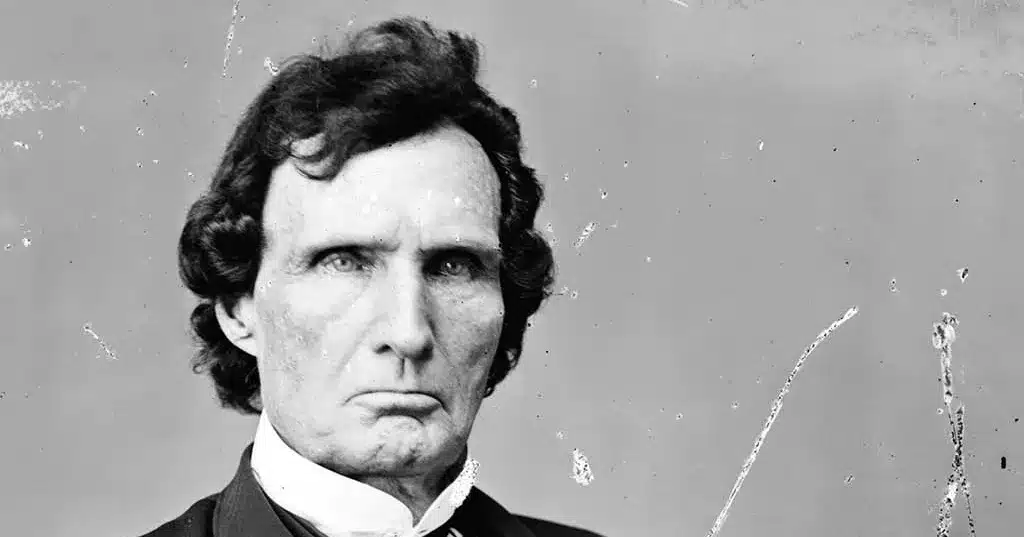
Thaddeus Stevens (April 4, 1792 – August 11, 1868) was an American politician and lawyer who served as a member of the United States House of Representatives from Pennsylvania. He was one of the leaders of the Radical Republican faction during the 1860s and played a central role in securing rights for Black Americans during Reconstruction.
Early Life and Education
Stevens was born in Danville, Vermont, on April 4, 1792, the second of four sons. His parents were Baptists who had moved from Massachusetts around 1786. He was named to honor Tadeusz Kościuszko, the Polish general who served in the American Revolutionary War. Stevens was born with a club foot, a condition that left him with a permanent limp and caused him to suffer taunts from classmates throughout his youth.
His father, Joshua Stevens, was a farmer and cobbler who abandoned the family; the circumstances of his departure and subsequent fate remain uncertain, though he may have died at the Battle of Oswego during the War of 1812. His mother, Sarah, determined that her sons improve themselves and enrolled young Thaddeus in the Caledonia Grammar School in Peacham, Vermont, in 1807. He later attended the University of Vermont but suspended his studies when the federal government appropriated campus buildings during the War of 1812. He then enrolled at Dartmouth College, where he graduated in 1814 and spoke at the commencement ceremony. Despite a stellar academic record, he was not elected to Phi Beta Kappa, an experience he reportedly found deeply scarring.
After graduation, Stevens returned to Peacham to teach briefly and began reading law in the office of John Mattocks. In early 1815, a friend’s correspondence led to an offer to teach at York Academy in Pennsylvania. He moved to York to teach and continued his legal studies in the offices of David Cossett.
Career and Achievements
Stevens moved to Gettysburg as a young man and quickly became a successful lawyer. He took an active interest in municipal affairs and then politics, becoming a fervent leader of the Anti-Masonic Party, which he believed was necessary to combat what he saw as Freemasonry’s evil conspiracy to secretly control the republican system of government. He was elected to the Pennsylvania House of Representatives, where he became a strong advocate of free public education.
Financial setbacks in 1842 forced him to relocate his home and practice to Lancaster, a larger city. There he joined the Whig Party and was elected to Congress in 1848. His work as a lawyer and politician in opposition to slavery cost him votes, and he did not seek reelection in 1852. After a brief involvement with the Know-Nothing Party, Stevens joined the newly formed Republican Party and was elected to Congress again in 1858.
As chairman of the House Ways and Means Committee during the American Civil War, Stevens played a leading role in financing the war through new taxes and borrowing. He worked alongside fellow radicals such as Massachusetts Senator Charles Sumner to oppose the expansion of slavery and concessions to the South. Stevens argued that slavery should not survive the war and grew frustrated by President Abraham Lincoln’s pace in supporting abolition. As Northern victory became apparent, Stevens came to believe that Black Americans should receive a stake in the South’s future through the confiscation of land from planters to be distributed to freedmen. These plans exceeded what Moderate Republicans would accept and were not enacted.
Notable Events and Milestones
After Lincoln’s assassination in April 1865, Stevens entered into direct conflict with President Andrew Johnson, who sought rapid restoration of the seceded states without guarantees for freedmen. This disagreement sparked an ongoing battle between Johnson and Congress, with Stevens leading the Radical Republicans in opposition. Following gains in the 1866 election, the radicals took control of Reconstruction away from Johnson.
Stevens’s final major effort was to secure articles of impeachment against Johnson in the House. He acted as a House manager during the impeachment trial, though the Senate ultimately did not convict the president.
Additional Resources
Thaddeus Stevens remains a significant figure in American history, particularly for his uncompromising stance on slavery and his advocacy for equal rights during Reconstruction. Historians’ assessments of Stevens have shifted dramatically over time: early 20th-century scholars viewed him as reckless and motivated by hatred of the white South, while since the 1950s, neoabolitionist historians have lauded his commitment to equality. Readers seeking more detailed information about Stevens’s life and political career can consult Wikipedia and other biographical archives.
Observer Voice is the one stop site for National, International news, Sports, Editor’s Choice, Art/culture contents, Quotes and much more. We also cover historical contents. Historical contents includes World History, Indian History, and what happened today. The website also covers Entertainment across the India and World.

