

Indigenous Signalling System to Support New High-Speed Corridors Following Made-in-India Bullet Train

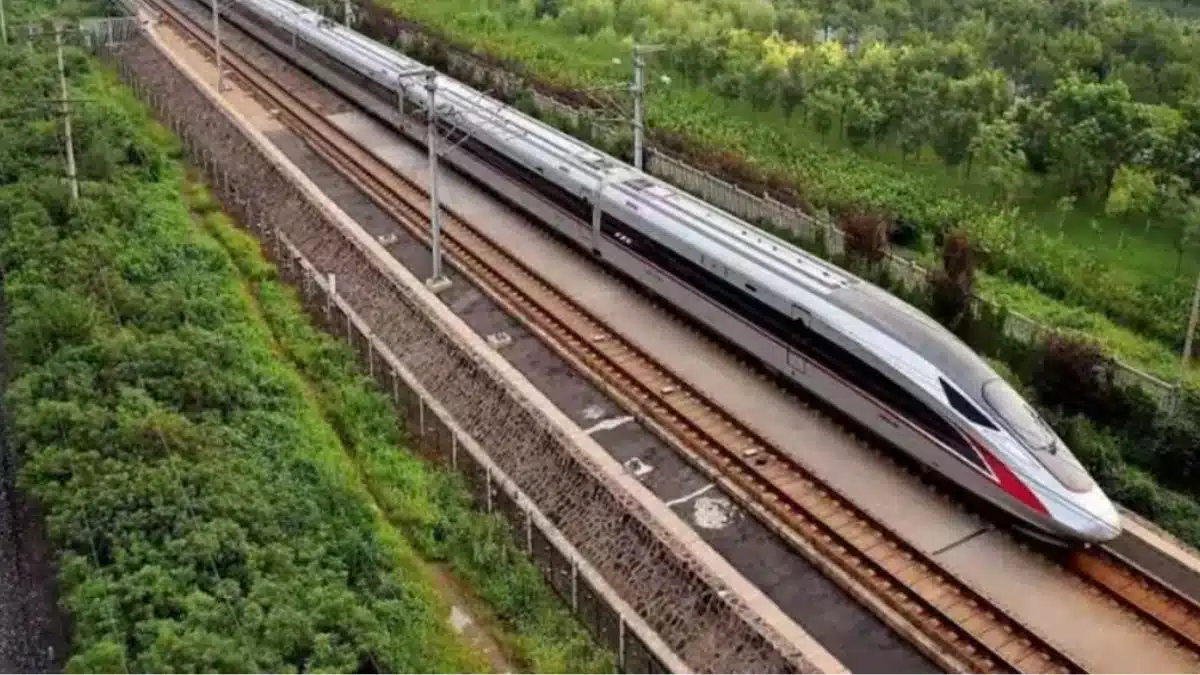
India is set to advance its high-speed rail capabilities with the development of its own control protocols. The Indian Railways has decided to manufacture the bullet train for the Mumbai-Ahmedabad corridor domestically and is now focusing on creating an indigenous advanced signalling system for future corridors. This initiative aims to reduce reliance on foreign technology as India plans nearly 7,000 km of new bullet train routes.
Bharat Train Control System Development
The new signalling protocol, named the Bharat Train Control System (BTCS), is being tailored to meet Indian operational conditions. This move comes in response to earlier criticism from former Japanese minister Hideki Makihara, who pointed out India’s choice to use open-source signalling protocols over Japan’s Digital Automatic Train Control system for the Mumbai-Ahmedabad High Speed Rail (MAHSR) project. Indian officials clarified that while trains from Japan’s Hitachi will be compatible with the European Train Control System (ETCS), they are awaiting proposals from Japanese suppliers.
Officials indicated that India remains open to transitioning to Japanese protocols if suitable offers are made. The BTCS is designed to be open-source and cost-effective, allowing for rapid and safe deployment across the country. Once established, this technology could potentially be offered to other nations, enhancing India’s position in the global railway technology market.
Future High-Speed Rail Plans
Approvals for the designs and route alignments of upcoming high-speed rail corridors are anticipated to be finalized by mid-2027. The BTCS will leverage insights gained from the MAHSR corridor, where the ETCS is currently being implemented. The introduction of an indigenous signalling protocol is expected to significantly benefit domestic railway design firms and equipment manufacturers.
In June 2022, the National High Speed Rail Corporation Ltd (NHSRCL) awarded a ₹4,100 crore contract for the signalling system on the MAHSR corridor to a consortium that includes India’s Dineshchandra R Agrawal Infracon Pvt Ltd and Germany’s Siemens. This consortium is deploying an ETCS Level 2-based signalling system capable of supporting train operations at speeds of up to 350 km/h. The Delhi-Meerut Rapid Rail Corridor, which operates India’s fastest train, also utilizes ETCS Level 2 signalling, supplied by France’s Alstom.
Observer Voice is the one stop site for National, International news, Sports, Editor’s Choice, Art/culture contents, Quotes and much more. We also cover historical contents. Historical contents includes World History, Indian History, and what happened today. The website also covers Entertainment across the India and World.
Follow Us on Twitter, Instagram, Facebook, & LinkedIn

