

PM Modi Launches India’s First Hydrogen-Powered Train: Route, Timings, and Operational Insights

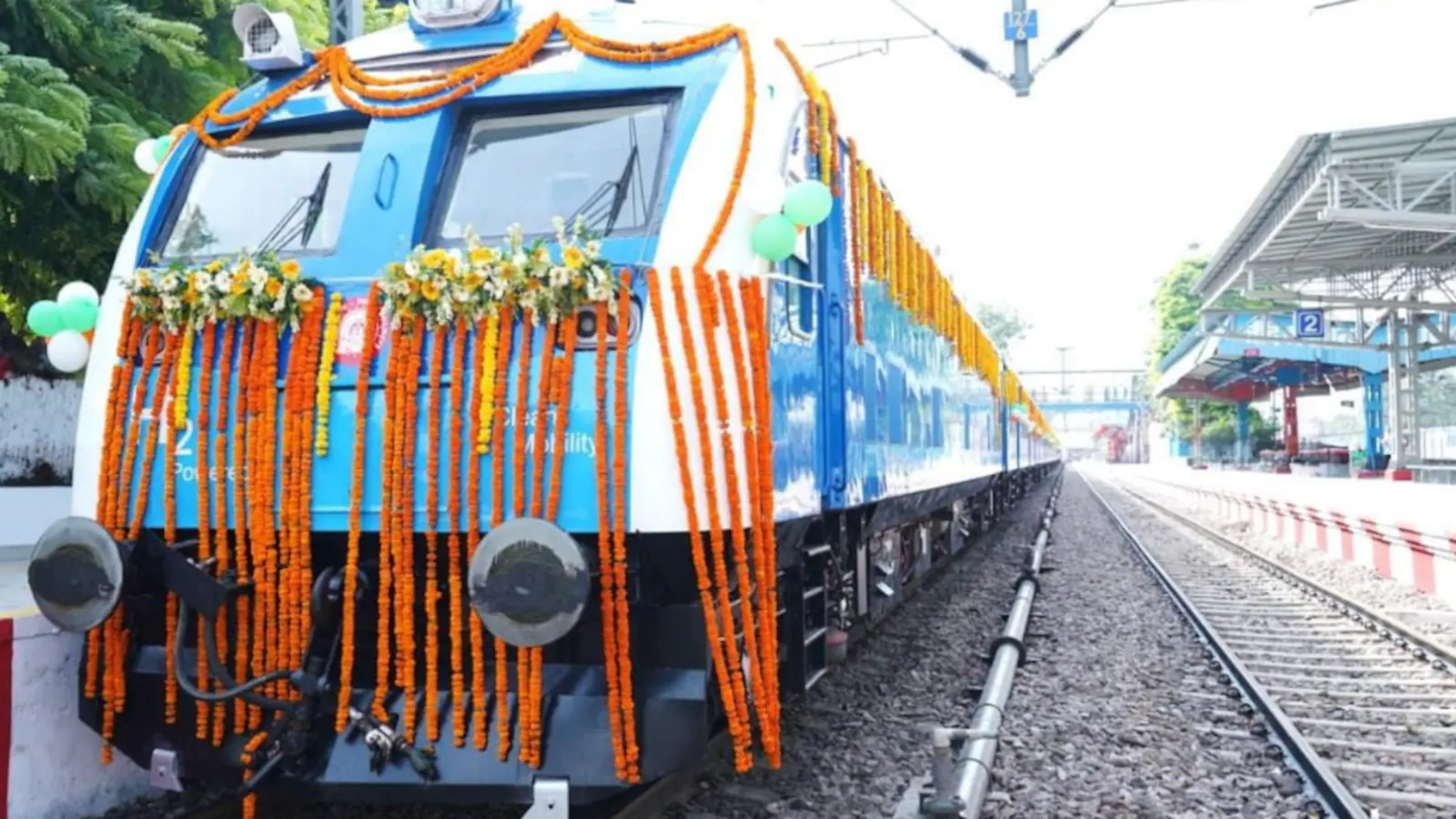
India’s first hydrogen-powered train was inaugurated by Prime Minister Narendra Modi on Friday at the Jind railway station in Haryana. This launch positions India among a select group of countries utilizing hydrogen as a fuel for trains. The initiative is part of a broader effort to promote greener mobility options, with hydrogen recognized as one of the cleanest fuels available.
The pilot project aims to explore the feasibility of hydrogen-powered trains on remote and heritage routes within Indian Railways, offering a potential alternative to electrification. Over the past 12 years, Indian Railways has significantly reduced its reliance on imported diesel through extensive electrification, with over 99% of its broad gauge network now electrified. The new hydrogen fuel cell train generates its own electricity onboard, unlike traditional electric trains that depend on overhead power lines.
Hydrogen Train Route, Train Number, Stoppages & Time Taken
The hydrogen train will operate between Jind and Sonipat, completing the journey in just over two hours. Train number 74010 will depart from Jind daily at 7:40 AM, arriving in Sonipat at 9:40 AM. The return service, Train number 74009, will leave Sonipat at 10:40 AM and reach Jind at 1:00 PM, taking 2 hours and 20 minutes.
Along the route, the train will stop at several stations, including Jind City, Pandu Pindara, Lalit Khera, and Gohana. The train will be managed under Northern Railways, with primary maintenance conducted at Jind.
Hydrogen Train: Top Things To Know
This hydrogen train features a 10-coach passenger configuration, making it the longest operational hydrogen train globally. It has a design speed of 110 km/h, but will operate at a maximum speed of 75 km/h on the Jind-Sonipat route. The train can carry up to 2,600 passengers and is equipped with a 3,200 horsepower propulsion system, making it one of the most powerful hydrogen trainsets in operation.
Countries like Germany, Japan, China, and the US are currently testing or using hydrogen train technology. The Jind-Sonipat route has been selected as the pilot corridor for this initiative, with the train developed entirely using indigenous technology.
How Does A Hydrogen Train Operate?
Hydrogen fuel cell technology generates electricity through a chemical reaction involving hydrogen, producing only water vapor as a by-product. This clean energy source serves as an alternative to traditional rail systems that rely on fossil fuels. Unlike diesel locomotives, hydrogen trains utilize an onboard power plant based on Proton Exchange Membrane (PEM) fuel cell technology.
The train carries hydrogen in cylinders mounted on it, which reacts with oxygen from the air to generate electricity. This electricity powers the traction motors that drive the wheels. The system eliminates combustion and reduces carbon emissions, contributing to cleaner rail transport.
To support operations, a hydrogen storage and refueling facility has been established at Jind. The Petroleum and Explosives Safety Organisation (PESO) has issued the necessary licenses for the storage and dispensing of compressed hydrogen gas at this facility. The infrastructure includes a hydrogen compression system and safety equipment to ensure reliable operations.
Observer Voice is the one stop site for National, International news, Sports, Editor’s Choice, Art/culture contents, Quotes and much more. We also cover historical contents. Historical contents includes World History, Indian History, and what happened today. The website also covers Entertainment across the India and World.
Follow Us on Twitter, Instagram, Facebook, & LinkedIn

