

India Unveils First Flex-Fuel Passenger Vehicle Pushing Clean Energy Agenda

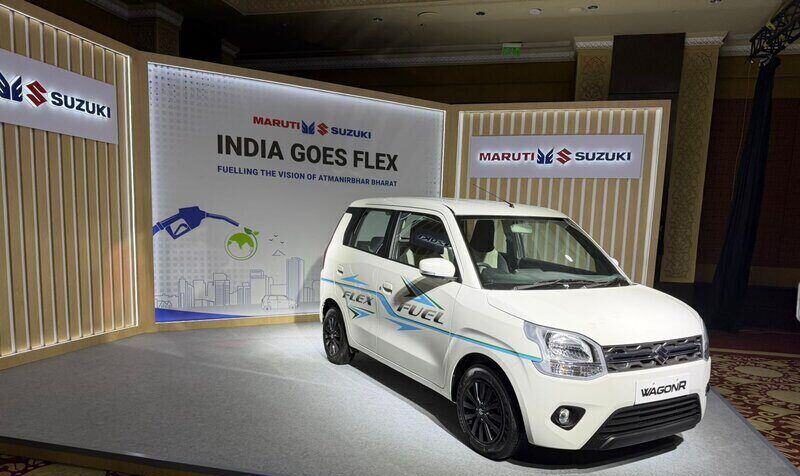
In a groundbreaking initiative towards a self-reliant India, Union Minister for Petroleum and Natural Gas, Shri Hardeep Singh Puri, officially launched the country’s first flex-fuel passenger vehicle, produced by Maruti Suzuki, in New Delhi. The launch, attended by Union Minister for Road, Transport and Highways, Shri Nitin Gadkari, is a significant step in promoting ethanol-based mobility and reducing dependence on fossil fuels.
Flex-fuel vehicles can operate on various ethanol-petrol mixtures, with blends ranging from E20 to E100. Minister Puri emphasized that this development marks not just a product launch but a pivotal moment in India’s energy transition. He explained that the introduction of flex-fuel technology is crucial for meeting the transportation needs of India’s vast middle class, which currently boasts around 37 lakh passenger vehicles.
Ensuring Energy Security Amid Global Disruptions
Shri Puri outlined India’s robust response to the recent global energy crises, highlighting that before military tensions escalated on February 28, nearly 60% of the country’s LPG imports passed through the Strait of Hormuz. He reassured that despite being home to 1.4 billion people and facing an energy demand growth three times the global average, India maintained consistent access to petroleum products nationwide. He noted, “There was not a single dry-out anywhere in the country,” indicating successful management through policy measures.
Through strategic actions, the government has managed to counter misinformation and potential supply shortages effectively. Puri attributed the stability in energy availability, affordability, and sustainability to the leadership of Prime Minister Shri Narendra Modi. He pointed out that while global prices fluctuated, India recorded one of the lowest fuel price increases.
A Sustainable Future with Ethanol
Emphasizing sustainability, Puri referenced successful ethanol blending initiatives in Brazil and the USA, stating that India’s ethanol blending program is a leading example of effective energy transition. The program has shifted from less than 1.5% blending in 2013-14 to an anticipated 20% by 2025-26, achieving its target five years ahead of schedule. The production capacity of ethanol has significantly grown, moving from 421 crore liters in 2014 to a projected 2000 crore liters by 2026.
Additionally, Puri highlighted the positive economic impact of this transition, suggesting that a 50% shift to flex-fuel compliant vehicles could generate a demand for 311.8 crore liters of ethanol and provide substantial income for farmers while also reducing carbon emissions by 66.4 lakh metric tonnes.
A Vision for Clean Mobility
The NITI Aayog has classified ethanol-based Flex-Fuel Vehicles (FFVs) as Zero-Emission Vehicles, thanks to their near-zero particulate matter emissions, positioning them as a viable solution to India’s air pollution crisis. The government’s future roadmap encompasses creating a nationwide flex-fuel ecosystem, initially rolling out 50–100 FFV fuel retail outlets in key corridors, expanding to almost 500 by December 2026, and aiming for 5,000 outlets in major cities by the end of 2027.
The government is committed to fostering this transition with supportive measures including pricing support, tax concessions, and infrastructure development. Puri urged automobile manufacturers to expedite the launch of flex-fuel models across different segments and called on oil marketing companies to boost E85 availability throughout the country.
With recent flex-fuel motorcycle launches by Hero MotoCorp and the unveiling of Maruti Suzuki’s passenger vehicle, India is poised to enter a new era of clean mobility, powered by local innovation and supported by the agricultural sector. This ambitious transition, according to Puri, promises to advance India’s energy security while embracing a cleaner, more sustainable future.
Observer Voice is the one stop site for National, International news, Sports, Editor’s Choice, Art/culture contents, Quotes and much more. We also cover historical contents. Historical contents includes World History, Indian History, and what happened today. The website also covers Entertainment across the India and World.
Follow Us on Twitter, Instagram, Facebook, & LinkedIn

