

Study Reveals 4,000 Years of Climate History on Majuli Island

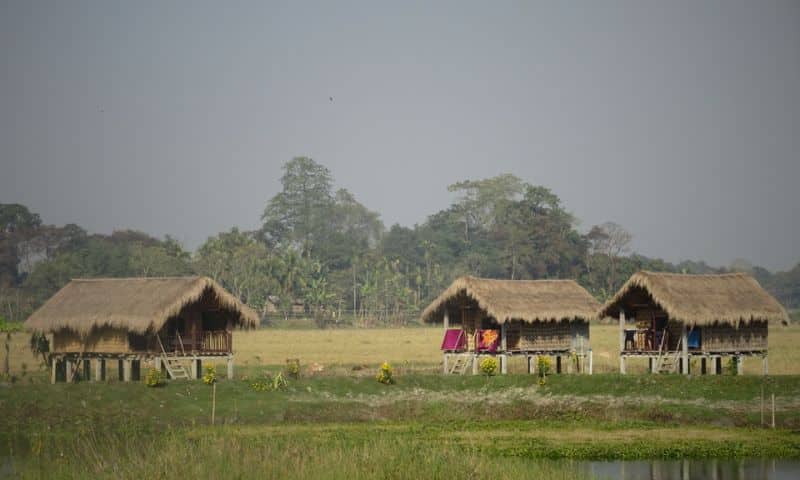
A groundbreaking study has reconstructed nearly 4,000 years of climate and vegetation history on Majuli Island, Assam, renowned as the world’s largest inhabited river island. This culturally significant area is home to numerous tribes and serves as a major hub for Neo-Vaishnavite culture. The research provides valuable insights into long-term climate variability, changes in vegetation, and flood dynamics, possibly aiding flood-affected communities in developing effective adaptation strategies.
Majuli Island, located between the Brahmaputra River to the south and east, the Subansiri River to the west, and a branch of the Brahmaputra to the north, faces ongoing challenges due to recurrent flooding and severe riverbank erosion. Despite the island’s recognition as a UNESCO tentative site for its cultural significance, there has been a lack of comprehensive long-term palaeoecological research utilizing palynological evidence. Pollen analysis is recognized as a reliable indicator of past environmental conditions, remaining preserved in sediments for thousands to millions of years.
Researchers from the Birbal Sahni Institute of Palaeosciences (BSIP) in Lucknow have conducted this pivotal palaeoecological study on Majuli Island, which is highly vulnerable to land loss, urbanization, deforestation, and recurring floods. The team collected a 150 cm deep sediment core from the Sakali Wetland, integrating pollen analysis to reconstruct historical vegetation with grain-size studies to assess river dynamics and flood intensity. This approach has yielded the first-ever comprehensive environmental record for the island, providing insights into the Mid-Late Holocene environmental changes and filling vital gaps in understanding the region’s climate and ecology.
Using a quantitative palaeoclimatic reconstruction method known as Coexistence Approach, the researchers estimated the mean annual temperature and precipitation for the period of 4,040 to 500 cal. years before present (BP). The findings indicate an initial warm and humid phase marked by dense forest cover from 4,040 to 2,260 cal. years BP, demonstrating resilience during the 4.2 ka dry climatic event. This was succeeded by periods of fluctuating monsoon intensity and flood regimes, including a notably moist period during 1,100 to 500 cal. years BP, coinciding with the Medieval Climatic Anomaly. The last 500 years have shown a decline in temperature and precipitation, alongside increased human influence and the expansion of fragmented vegetation.
Led by Ms. Arya Pandey and Dr. Swati Tripathi, this collaborative effort with several experts evaluated the interplay between the fluvial processes of the Brahmaputra and the ecological dynamics surrounding Majuli. The data reveal a transition from low- to high-energy fluvial conditions, pointing to an increasing hydrodynamic instability, enhancing the understanding of climate-vegetation-fluvial interactions within river island ecosystems.
This innovative integration of pollen and grain-size analyses offers critical insights into past flood intensity, sediment transport, and erosion, which are essential for effective river management and disaster mitigation within the Brahmaputra basin. The study underscores the synchronous relationship between local vegetation dynamics and major global climatic events, highlighting the region’s sensitivity to broader climatic changes. These findings contribute to the scientific foundation for biodiversity conservation, wetland restoration, and sustainable land-use planning on Majuli Island.
The study, published in the Review of Palaeobotany and Palynology, establishes the first multi-proxy reconstruction of long-term climate-vegetation dynamics and river processes on Majuli Island. This research has the potential to inform policy-making and climate adaptation strategies that benefit communities grappling with recurrent flooding and land loss.
Observer Voice is the one stop site for National, International news, Sports, Editor’s Choice, Art/culture contents, Quotes and much more. We also cover historical contents. Historical contents includes World History, Indian History, and what happened today. The website also covers Entertainment across the India and World.

