

Commission Boosts Air Quality Measures in Delhi-NCR

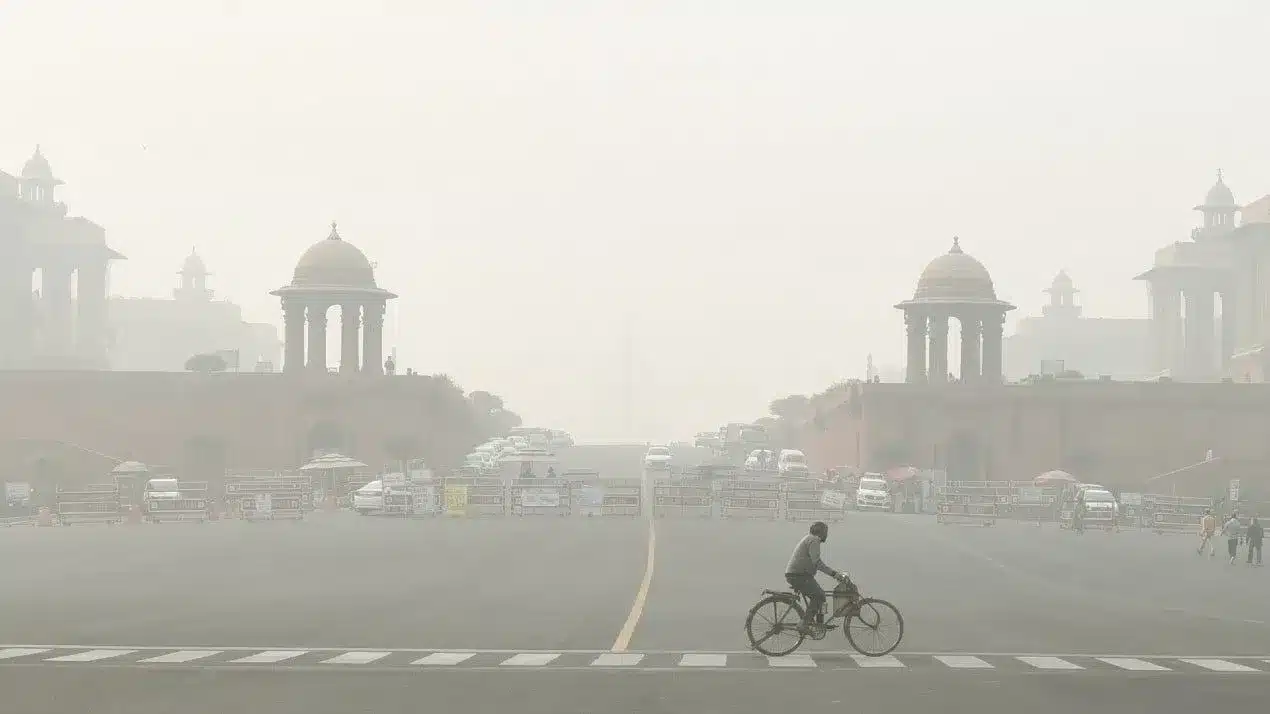
In a pivotal meeting held on February 20, 2026, the Commission for Air Quality Management in NCR and Adjoining Areas (CAQM) took significant steps to combat air pollution in the Delhi-NCR region. The meeting, chaired by Sh. Rajesh Verma, focused on a comprehensive report generated by a panel of 33 experts, which was commissioned by the Hon’ble Supreme Court in response to ongoing concerns regarding air quality.
The expert analysis revealed that particulate matter (PM2.5) remains the chief pollutant affecting air quality in Delhi, primarily influenced by local emissions paired with the cross-regional movement of pollutants. Data from the report illustrates how various sources contribute to PM2.5 levels: during winter, secondary particulates from gaseous emissions (27%), transport (23%), and biomass burning (20%) are the leading culprits, while in summer, dust (27%) becomes the primary contributor, followed by transport (19%).
Expansion of Air Monitoring Stations
One of the key outcomes of the meeting was the decision to enhance the Continuous Ambient Air Quality Monitoring Stations (CAAQMS) network. This initiative aims to improve air quality monitoring by adding 46 new stations across Delhi and surrounding states—14 in Delhi, 16 in Haryana, 1 in Rajasthan, and 15 in Uttar Pradesh. This expansion will boost the total number of monitoring stations in the region to 157, thereby heightening the assessment of air pollutants and establishing a reliable baseline for air quality.
Tackling Construction Waste and Emission Standards
Additionally, the CAQM approved stricter emission standards for industries throughout Delhi-NCR, alongside enhanced protocols for managing construction and demolition waste and dust mitigation efforts. This marks a focused approach to address the various sources of air pollution affecting the densely populated region.
Addressing Wheat Stubble Burning and Traffic Congestion
The commission also acknowledged a directive aimed at eliminating wheat stubble burning during the year, a significant contributor to winter pollution. Furthermore, discussions included addressing congestion at Municipal Corporation of Delhi (MCD) toll plazas and the implementation of barrier-free Multi-Lane Free Flow (MLFF) systems. The integration of RFID and ANPR technologies is anticipated to facilitate smoother traffic flow, which could, in turn, lead to reduced vehicular emissions.
Reviewing Action Plans Against Air Pollution
The meeting also highlighted the review of State-Level and City Annual Action Plans for 2026, designed to implement structural measures across several sectors, including transport and waste management. This ongoing monitoring process is critical to ensuring effective air pollution abatement strategies are employed.
The members of the Commission underscored the importance of vigilance and coordination among all involved agencies to successfully implement statutory directives. Moreover, the re-appointment of Dr. S.D. Attri as a Full-Time Technical Member of the CAQM was also noted, reinforcing the commission’s commitment to expert guidance in tackling air quality issues.
Observer Voice is the one stop site for National, International news, Sports, Editor’s Choice, Art/culture contents, Quotes and much more. We also cover historical contents. Historical contents includes World History, Indian History, and what happened today. The website also covers Entertainment across the India and World.

