

India Expands Nuclear Technology in Medicine and Industry

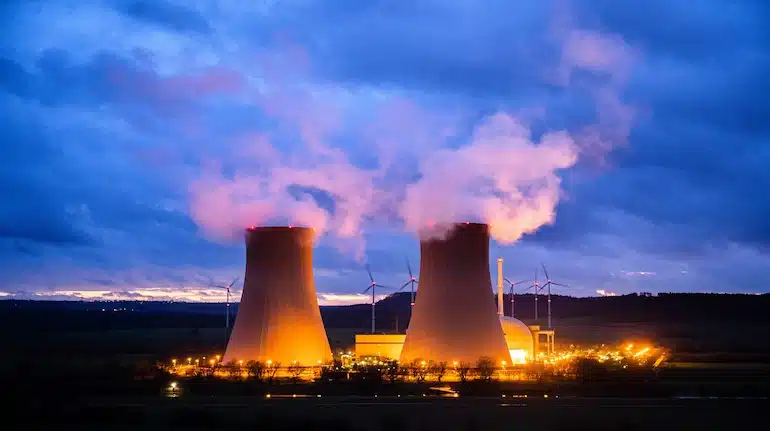
The Indian government is making significant strides in the expansion of nuclear applications in medicine and industry. With a range of new initiatives, the administration is supporting the domestic development of nuclear medicines and enhancing the nation’s capabilities in nuclear technology. Key advancements include the production of therapeutic doses of various isotopes and the establishment of new industrial radiography devices.
Innovations in Nuclear Medicines
Recent government initiatives have led to the creation of high-specific activity nuclear medicines for various medical applications. This includes the development of high specific activity 131I-mIBG for treatment, medical-grade Mo-99 for diagnostic purposes, and Technicium-99m, which is essential for nuclear medicine diagnostics. Additionally, innovative treatments like the ready-to-use Ga-68-PSMA radiopharmaceutical for prostate cancer detection and staging have been introduced.
Furthermore, the range of available treatments has expanded to include No Carrier Added (NCA) Lu-177 based radiopharmaceuticals for effective cancer therapy, as well as CS-137 pencils for blood irradiation. Treatments such as the Ir-192 based brachytherapy system and Ruthenium-106 plaques for ocular tumors are also now available. The ability to treat unresectable liver cancer with Yttrium-90 glass microspheres marks a significant milestone in curative nuclear medicines.
Boosting Industrial Application
To support the industrial sector, the government has introduced devices like COCAM-120 and ROTEX-I, which serve as critical import substitutes. The Board of Radiation & Isotope Technology (BRIT) has signed memorandums of understanding with entrepreneurs to facilitate the establishment of gamma radiation processing facilities across India. Currently, a total of 42 such facilities have been set up, underscoring the government’s commitment to enhancing the use of nuclear radiation in industries.
Fostering Indigenous Development
The Indian government is also promoting indigenous nuclear technology. It has approved the implementation of 700 MW Pressurised Heavy Water Reactors (PHWR) designed by NPCIL, with all essential equipment sourced from domestic industries. Additionally, BHAVINI is working on a 500 MWe Prototype Fast Breeder Reactor project in Kalpakkam, awaiting the go-ahead for two more units in the same location, further highlighting the country’s self-reliance in nuclear technology.
International Collaborations
On the international front, Indian institutions are playing a key role in nuclear energy collaborations. The Institute of Plasma Research (IPR) is participating in the International Thermonuclear Experimental Reactor project, which aims to develop nuclear fusion as a clean energy source. The Global Centre for Nuclear Energy Partnership (GCNEP) is actively involved in capacity building within the nuclear energy domain, showcasing India’s dedication to peaceful atomic energy initiatives.
Observer Voice is the one stop site for National, International news, Sports, Editor’s Choice, Art/culture contents, Quotes and much more. We also cover historical contents. Historical contents includes World History, Indian History, and what happened today. The website also covers Entertainment across the India and World.

