

India Revamps Startup Recognition Framework for Innovation Boost

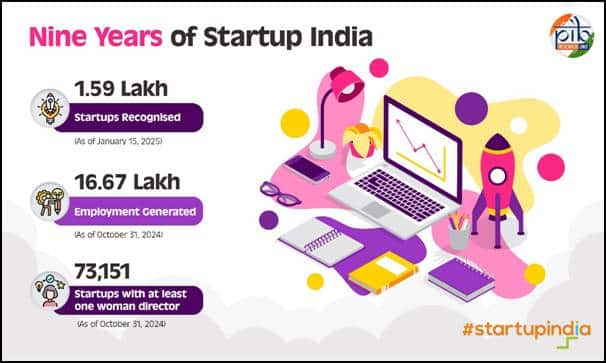
The Indian government has unveiled significant revisions to its startup recognition framework, aiming to bolster the Startup India Action Plan. This initiative aligns with the Prime Minister’s vision to transform India into a global powerhouse of innovation, a manufacturing-led economy, and a hub for emerging technologies. As the Startup India program enters its second decade, the updated framework is designed to offer a more predictable and inclusive policy environment for entrepreneurs, while also encouraging long-term investments in high-technology and research-intensive sectors.
Increased Turnover Limits
One of the key changes in the updated startup recognition criteria is the enhancement of the turnover threshold. Responding to the dynamic nature of the startup ecosystem, the government has raised the turnover limit for startups from ₹100 crore to ₹200 crore. This adjustment aims to better support enterprises across varying stages of their business development.
New Category for Deep Tech Startups
In a notable move, a dedicated sub-category for “Deep Tech Startups” has been introduced. This category targets businesses that are engaged in pioneering and breakthrough technologies. The government has refined the core characteristics of Deep Tech Startups through consultations with relevant ministries, departments, and key stakeholders. Recognizing that these ventures often face longer development timelines and require intensive research and capital, the eligibility criteria have been expanded. The age limit for these startups has been extended from 10 years to 20 years since their incorporation, and the turnover ceiling is now set at ₹300 crore.
Cooperative Societies Included
In a progressive step, the revised framework allows cooperative societies to qualify for startup recognition. This expansion is aimed at fostering innovation-focused growth in agriculture, allied sectors, rural industries, and community enterprises. Multi-State Cooperative Societies registered under the Multi-State Cooperative Societies Act of 2002 and state-level cooperative societies can now apply for recognition, provided they meet the necessary criteria.
Consultative Process and Future Implications
The formulation of this revised framework involved extensive dialogue with stakeholders throughout the startup ecosystem and various government departments. The changes are expected to enhance access to benefits for research and innovation-driven enterprises. Additionally, this initiative will offer targeted support to deep tech ventures that require extended development periods and enable cooperatives to spur innovation in agriculture and rural development. Overall, these revisions are poised to further solidify India’s status as a global leader in high-technology and knowledge-intensive entrepreneurship.
Observer Voice is the one stop site for National, International news, Sports, Editor’s Choice, Art/culture contents, Quotes and much more. We also cover historical contents. Historical contents includes World History, Indian History, and what happened today. The website also covers Entertainment across the India and World.
Follow Us on Twitter, Instagram, Facebook, & LinkedIn

