

AI Empowering Researchers to Revitalize Cultural Heritage

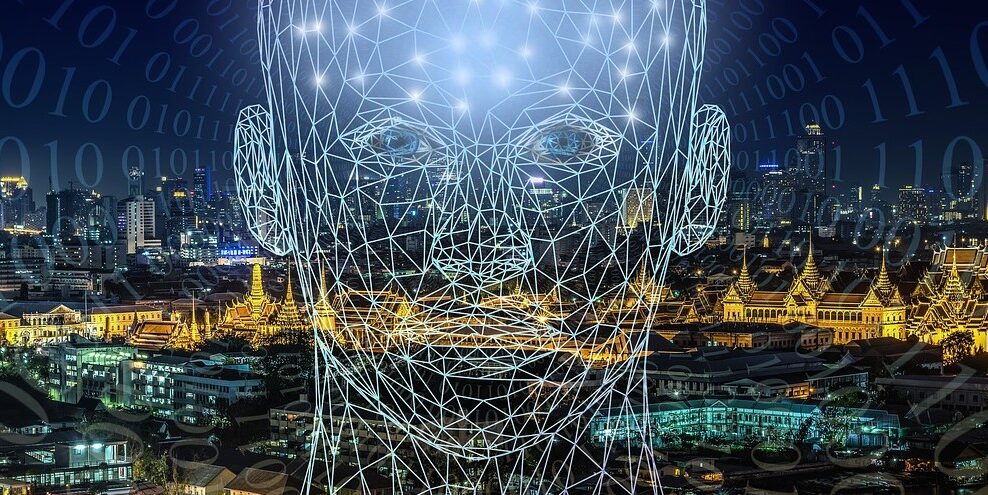
Artificial intelligence is revolutionizing the documentation and preservation of cultural heritage, enabling unprecedented access to historical knowledge. Unlike earlier digitization efforts that primarily focused on scanning texts and images, AI now facilitates large-scale structuring and analysis of heritage materials. This transformation allows previously scattered and fragile cultural artifacts to be organized and made accessible in innovative ways, enhancing our understanding of history.
From Scanning to Structured Knowledge
Digitization has long been a cornerstone of heritage preservation, with significant advancements being made in India’s National Archives. Over 100 million pages of historical documents are now available online through the Abhilekh Patal portal, providing searchable access to centuries of administrative and cultural records. This initiative marks a significant leap in making historical materials more accessible to the public.
In addition, national missions are further expanding the scope of archival digitization. The Ministry of Culture’s Gyan Bharatam Mission aims to survey, document, and digitize over 10 million Indian manuscripts across the country. These digitization efforts create a digital foundation that allows AI to transform static scans into meaningful cultural knowledge, making it easier for researchers and the public to engage with India’s rich heritage.
AI for Transcription, Translation, and Metadata
One of the major challenges in heritage archiving is ensuring that digitized materials are usable. AI tools are increasingly being employed to automate tasks such as transcription, translation, and metadata tagging, which would otherwise take human experts decades to complete. For instance, the Asiatic Society in Kolkata, in collaboration with IIT Kharagpur, IIT Delhi, and CDAC, is utilizing AI and hyperspectral imaging to decode and translate thousands of previously unreadable manuscripts.
Advanced AI platforms like Vidhvanika are being developed to convert scanned text into machine-readable formats, enabling the generation of metadata and improving archival retrieval. These innovations allow researchers to connect disparate materials across various languages, scripts, and historical periods, creating cohesive digital archives that enhance accessibility and understanding of cultural heritage.
Enhancing Global Digital Cultural Platforms
The adoption of AI in heritage preservation is not limited to India; it is a global trend. Large international initiatives demonstrate how technology can unify and expand access to cultural data. For example, Europeana, a pan-European platform, employs AI to enrich metadata and facilitate multilingual searches across over 50 million digitized cultural items from more than 4,000 institutions worldwide.
Moreover, AI is being used in various projects to support 3D reconstructions, virtual tours, and interpreter systems, making heritage more immersive and discoverable across continents. At the multilateral level, UNESCO’s Culture Sector has launched a series of AI-centric projects focused on utilizing machine learning for risk assessment, heritage monitoring, and ethical cultural preservation, showcasing the global commitment to integrating technology in heritage work.
Policy and Institutional Backing
The integration of AI into heritage preservation reflects broader policy shifts at both national and international levels. The Indian government is actively promoting the use of AI, augmented reality (AR), virtual reality (VR), and advanced technologies in museum digitization and cultural dissemination. Under India’s G20 Presidency, collaboration with UNESCO emphasizes the ethical and inclusive use of digital technologies, particularly AI, to preserve and promote cultural heritage.
Such policy frameworks are essential for ensuring that AI is utilized responsibly, benefiting both heritage institutions and community stakeholders. By prioritizing digital heritage, governments are paving the way for innovative approaches to cultural preservation that can adapt to the challenges of the digital age.
AI is not merely automating tasks; it is fundamentally transforming how societies remember their past and engage with their cultural narratives. By bridging the gap between raw digitized content and structured heritage knowledge, AI is unlocking stories that were once confined to fragile manuscripts and artifacts, making them accessible to future generations.
Observer Voice is the one stop site for National, International news, Sports, Editor’s Choice, Art/culture contents, Quotes and much more. We also cover historical contents. Historical contents includes World History, Indian History, and what happened today. The website also covers Entertainment across the India and World.

