

Hanif Mohammad’s Remarkable Four-Day Standoff: A Legendary Test Match in Bridgetown

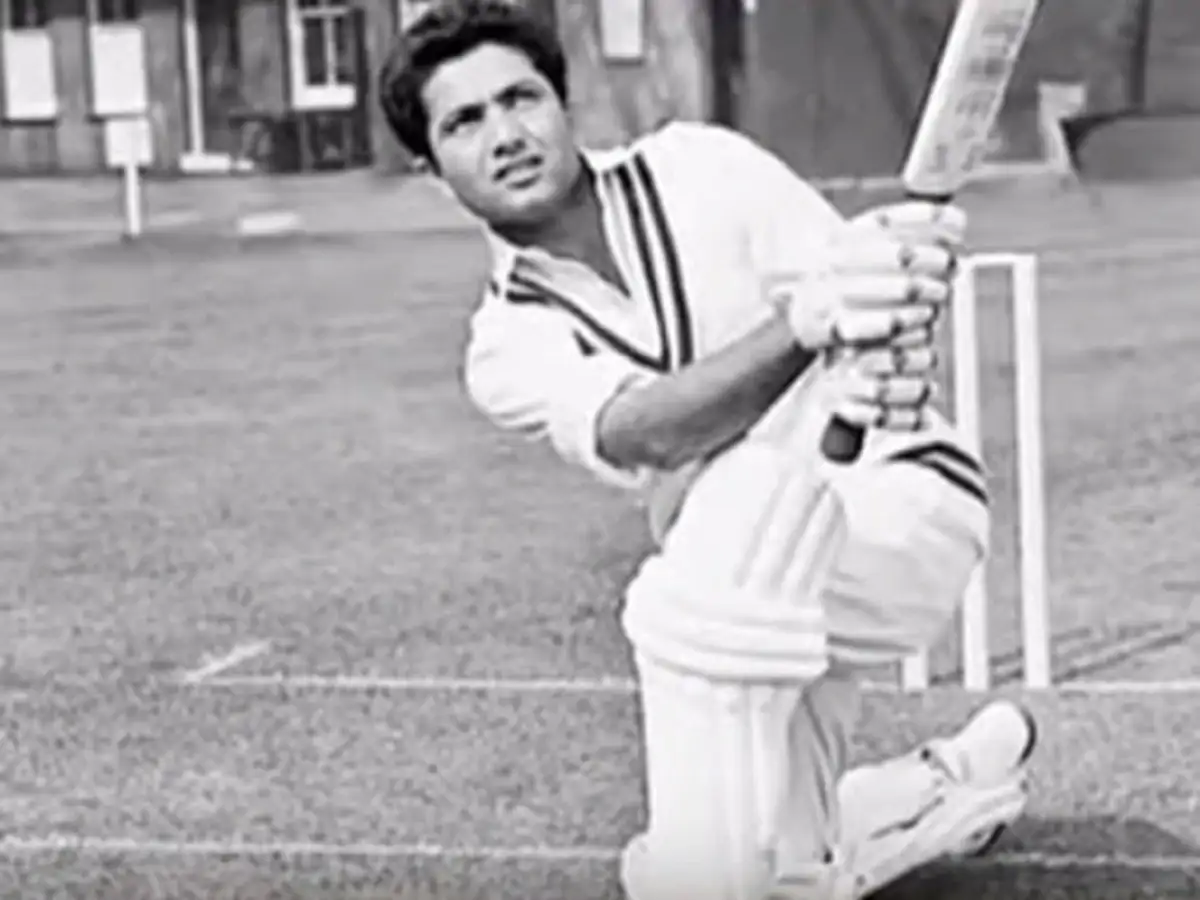
Every cricket team has its unique identity, shaped by the styles of its players. While Australia is known for its aggressive play and India for its legendary batsmen, Pakistan’s legacy is often tied to its fast bowlers. However, before the era of Imran Khan and Wasim Akram, there was Hanif Mohammad, a player renowned for his patience and resilience at the crease. His remarkable performance during the first Test of Pakistan’s 1958 tour of the West Indies exemplifies his crucial role in the team’s history.
Historic Test Match Against West Indies
In January 1958, Pakistan faced the West Indies in their inaugural Test match at Bridgetown, Barbados. The home team set a formidable challenge, with Conrad Hunte scoring 142 runs on his debut and Everton Weekes contributing 197 runs, marking the last century of his career. The West Indies amassed a staggering total of 579 runs in their first innings, putting immense pressure on the inexperienced Pakistani side. Despite debuting Nasim-ul-Ghani, who became the youngest Test cricketer at the time, Pakistan struggled and was bowled out for just 106 runs in their first innings, forcing them to follow on and trail by 473 runs.
As Pakistan entered their second innings, the situation appeared dire. Hanif Mohammad, opening the batting, faced a daunting task: to bat for nearly four full days to save the match. The conditions were challenging, with a deteriorating pitch and hostile bowling from the West Indies, including the pace of Roy Gilchrist and the spin of Collie Smith. Hanif’s determination and focus would soon become the cornerstone of Pakistan’s resistance.
Hanif’s Remarkable Innings
Hanif Mohammad’s second innings began on a precarious note, as he ended Day 2 with just five runs. His captain, Abdul Kardar, left him a note stating, “You are our only hope,” highlighting the weight of expectation on Hanif’s shoulders. By the end of Day 3, he had managed to score 61 runs, demonstrating remarkable composure against the West Indies’ aggressive bowling attack. As the days progressed, Hanif’s performance became increasingly impressive. On the fourth day, he scored a century, reaching 100 runs while Pakistan lost only one wicket.
Despite facing physical challenges, including bruised thighs and sunburn, Hanif continued to bat with unwavering focus. He took breaks to eat and recuperate but remained steadfast at the crease. By the end of Day 5, he had accumulated an astonishing 270 runs, putting Pakistan in a position of slight advantage. His ability to withstand the pressure and bat for extended periods showcased his exceptional skill and determination.
A Defining Moment in Cricket History
On the sixth day of the Test match, Hanif Mohammad’s innings continued to unfold. He added 67 more runs to his total, ultimately finishing with a remarkable score of 337 runs. This innings not only helped Pakistan take a lead of 153 runs but also marked a significant moment in cricket history. When Pakistan declared at 657 for eight, they had set a challenging target for the West Indies with only 11 overs remaining in the match.
Hanif’s innings, which included 26 fours, 16 threes, 40 twos, and 105 singles, lasted an incredible 970 minutes, making it the longest individual innings in Test cricket by time spent at the crease. His performance was a testament to his resilience and skill, and it remains a defining act of resistance in Pakistan’s cricketing narrative. The match concluded in a draw, but Hanif Mohammad’s legacy as a stalwart of Pakistani cricket was firmly established on that historic day, January 23, 1958.
Observer Voice is the one stop site for National, International news, Sports, Editor’s Choice, Art/culture contents, Quotes and much more. We also cover historical contents. Historical contents includes World History, Indian History, and what happened today. The website also covers Entertainment across the India and World.

