

Key Outcomes Expected from EU-India Summit: FTA, Defence, and Mobility, While EU Stays Firm on CBAM and Paris Agreement

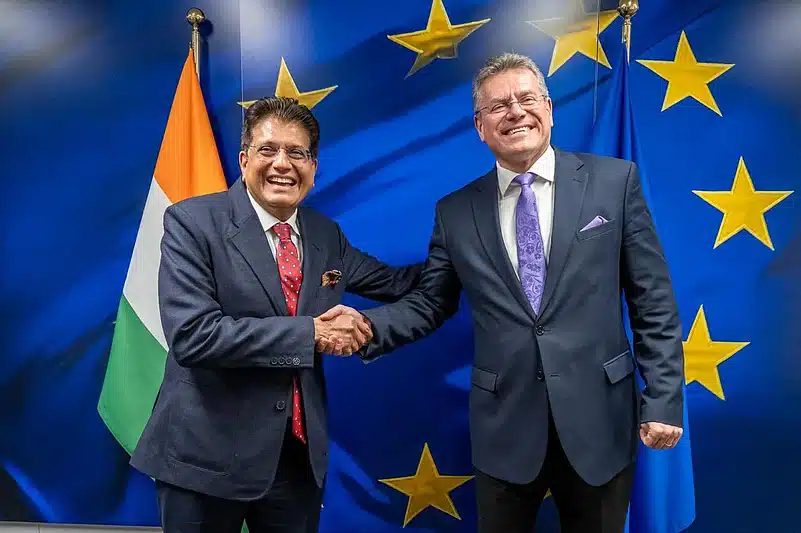
The upcoming India-EU summit is set to mark a significant milestone in diplomatic relations, with both parties poised to announce the successful conclusion of negotiations for a free trade agreement (FTA). While the formal signing will occur later, the summit will also see the establishment of a security and defense partnership aimed at enhancing industrial collaboration, alongside an agreement focused on mobility. The summit, co-chaired by Indian Prime Minister Narendra Modi and the presidents of the European Council and Commission, will take place on January 25, coinciding with India’s Republic Day celebrations.
Key Outcomes of the Summit
The India-EU summit is expected to yield three major agreements that will elevate the partnership between the two entities. First and foremost is the conclusion of the FTA negotiations, which has been a long-standing goal for both sides. Although the formal signing of the agreement will follow later, the announcement of its completion is seen as a significant achievement. Additionally, the summit will introduce a security and defense partnership, which aims to foster collaboration in defense industries and enhance mutual trust. This partnership reflects a shared commitment to addressing security challenges, despite existing differences, particularly regarding India’s relationship with Russia.
The leaders will also adopt a Joint Comprehensive Strategic Agenda for 2026-2030, aligning with the EU’s strategic framework for India released last year. This agenda has been positively received by Indian officials, as it aligns closely with India’s interests and priorities.
Contentious Issues in FTA Negotiations
While the FTA negotiations have progressed, several contentious issues remain unresolved. A primary point of contention is the EU’s Carbon Border Adjustment Mechanism (CBAM), which India views as a sovereignty issue that should not be intertwined with trade agreements. The EU insists that any agreement must incorporate both parties’ commitments to the Paris Agreement on climate change. Sources indicate that a compromise on CBAM is likely, allowing for a mention of the Paris treaty in the FTA without imposing strict limitations on India.
The formal signing of the FTA is contingent upon completing legal reviews and receiving approval from the European Parliament. Both sides are committed to expediting this process, aiming for the FTA to come into effect as soon as possible. The EU has expressed its unwillingness to waive CBAM for India, as it applies to all countries, but discussions are ongoing regarding support for India’s decarbonization efforts.
Strengthening Security and Defense Ties
The anticipated security and defense agreement is another critical outcome of the summit. This partnership signifies a mutual recognition of India and the EU as trustworthy and like-minded partners, despite differing perspectives on geopolitical issues. Under this new framework, both parties will initiate negotiations for a Security of Information Agreement, which will facilitate the exchange of classified information and bolster cooperation in security and defense matters.
This agreement could pave the way for India’s involvement in EU security and defense initiatives, aligning with EU treaty frameworks. The summit discussions are expected to address regional and global security challenges, including the ongoing situation in Ukraine, where the EU is encouraging India to provide humanitarian assistance.
Mobility Agreement and Broader Implications
In addition to the FTA and defense agreements, the summit will also focus on a mobility agreement aimed at managing migration effectively. This agreement seeks to address illegal migration while promoting balanced talent mobility that aligns with both India’s developmental goals and the EU’s economic needs. The EU emphasizes the importance of a sensible approach to migration, which will benefit both parties.
As the summit approaches, discussions are likely to cover a range of global issues, including the humanitarian crisis in Ukraine. The EU has highlighted the urgent need for assistance, particularly in providing power generators and equipment to restore essential services in the war-torn country. The outcomes of this summit are poised to shape the future of India-EU relations, reinforcing their commitment to collaboration on critical global challenges.
Observer Voice is the one stop site for National, International news, Sports, Editor’s Choice, Art/culture contents, Quotes and much more. We also cover historical contents. Historical contents includes World History, Indian History, and what happened today. The website also covers Entertainment across the India and World.
Follow Us on Twitter, Instagram, Facebook, & LinkedIn

