

The Drawbacks of Relying on AI for Mundane Workplace Tasks

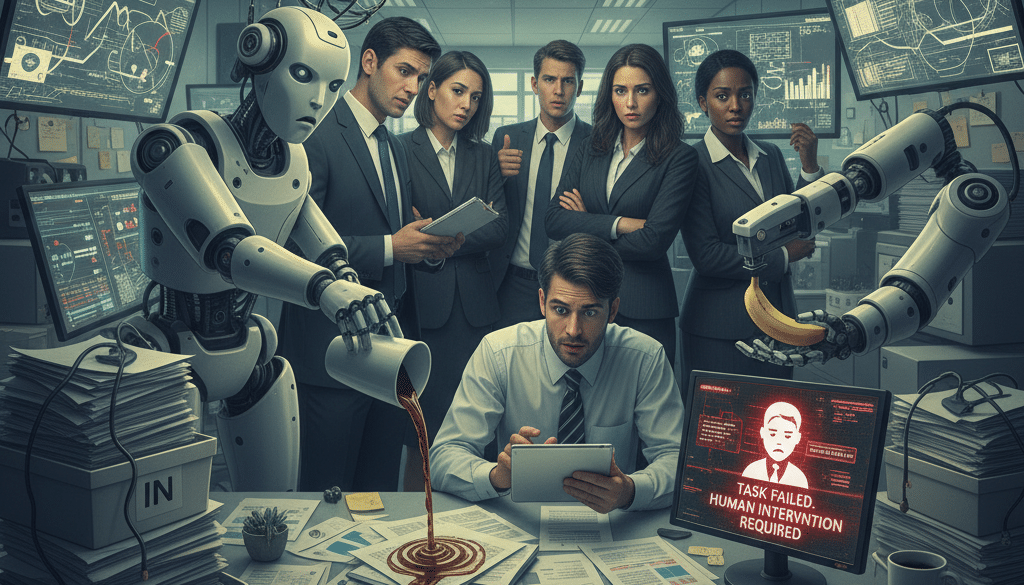
Workdays devoid of monotonous tasks are becoming increasingly attainable, thanks to advancements in artificial intelligence (AI). Innovative AI tools are now capable of managing emails, taking meeting notes, and filing expense reports, allowing employees to focus on more significant responsibilities. However, experts caution that while these technologies can enhance productivity, they may also inadvertently stifle creativity by eliminating the mental downtime that often leads to innovative ideas.
Balancing Productivity with Creativity
Aflac’s Chief Executive, Dan Amos, exemplifies a balanced approach to work by incorporating low-intensity tasks into his schedule. He delegates routine activities to assistants or AI, allowing him to engage in reflective practices after meetings. Amos believes that taking a few moments to digest key points fosters creativity and innovation. He often sends handwritten notes to employees celebrating milestones, emphasizing the importance of personal touches in a digital age.
Amos also values the concept of “lull time,” which he believes is essential for mental rejuvenation. He finds inspiration in unexpected places, such as the steam room after workouts, where he often emerges with fresh ideas. His commitment to maintaining mental breaks is evident in his decision to avoid ad-free streaming services, as he appreciates the brief pauses that commercials provide for reflection and relaxation. This approach highlights the importance of allowing the mind to wander, which can lead to unexpected insights.
Addressing Burnout in the Workplace
In today’s fast-paced corporate environment, the idea of taking breaks is often viewed negatively. Many employees return from holidays to a barrage of emails and immediate demands. However, Roger Kirkness, CEO of the software startup Convictional, is challenging this norm. He recently sent his team a message outlining quarterly goals without assigning immediate tasks, recognizing that employees often generate their best ideas after a break.
Kirkness has observed that while AI has significantly boosted productivity—by approximately 20%—it has also led to mental fatigue among team members. To combat this, Convictional has adopted a four-day workweek, allowing employees more time to recharge while maintaining productivity levels. This shift aligns with insights from Juliet Schor, an economist who advocates for reduced work schedules as a means to enhance creativity and innovation.
The Value of ‘White Space’
Despite the potential benefits of busywork, many business leaders remain hesitant to embrace it as a tool for fostering innovation. Executive coach LK Pryzant has introduced the term “white space” to describe the concept of allowing time for creativity to flourish. This term conveys a sense of strategic value, contrasting with the often negative connotation associated with busywork.
Pryzant encourages individuals to resist multitasking during simple tasks, such as walking or driving, to create mental space for new ideas. While there is no guarantee that inspiration will strike during mundane activities, the current technological landscape offers numerous opportunities to alleviate routine burdens. However, experts warn against completely eliminating boredom, as it can be a catalyst for creativity.
In a world increasingly dominated by efficiency and productivity, it is crucial to recognize the value of mental downtime. As businesses continue to integrate AI into their operations, finding a balance between automation and creative freedom will be essential for fostering innovation and preventing burnout.
Observer Voice is the one stop site for National, International news, Sports, Editor’s Choice, Art/culture contents, Quotes and much more. We also cover historical contents. Historical contents includes World History, Indian History, and what happened today. The website also covers Entertainment across the India and World.

