

From Metaphor to Reality: The Evolution of the Information Superhighway

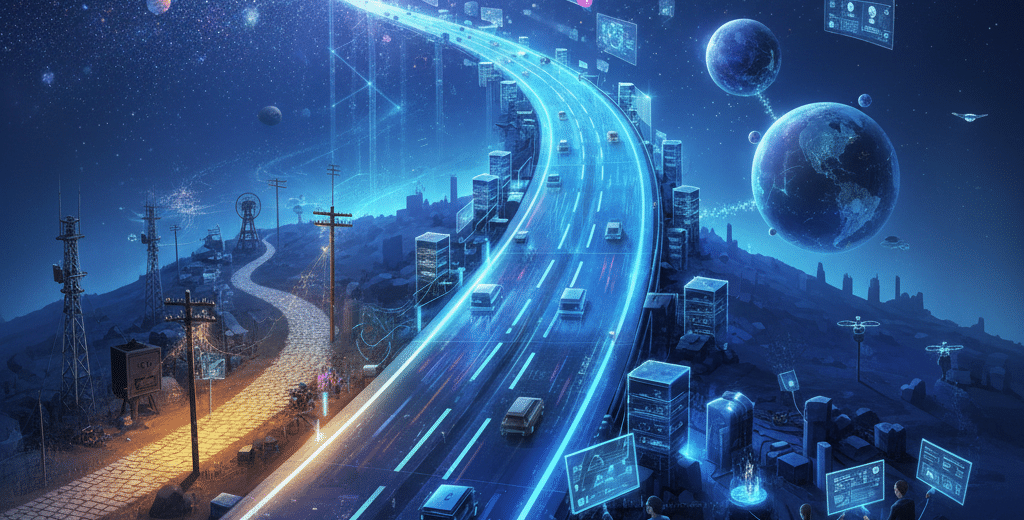
Ask a futurist about self-driving cars, and they will paint a vivid picture of a future where traffic flows seamlessly, pedestrians cross streets without hesitation, and accidents are a rarity. While this vision is likely to materialize eventually, the journey to that future may be fraught with challenges, potentially lasting decades. During this transitional phase, road conditions could deteriorate, making human driving seem not just outdated but unimaginable.
Current State of Autonomous Vehicles
As of now, only a small fraction of vehicles on the road are fully autonomous. Companies like Waymo are leading the charge, providing over 250,000 rides weekly in cities such as Phoenix, San Francisco, Los Angeles, and Austin. However, the experience of San Francisco illustrates the complexities of integrating self-driving technology into existing traffic systems. For instance, a Waymo robo-taxi recently found itself stuck behind a double-parked delivery van. Instead of maneuvering around it, the Waymo engaged in a standoff with another Waymo vehicle, resulting in a four-minute gridlock. This incident highlights the challenges that automated driving faces, where the expected efficiency can sometimes lead to unexpected delays and confusion on the roads.
The Challenges of Mixed Traffic
As autonomous vehicles become more prevalent, the interaction between human drivers and automated systems will become increasingly complicated. Imagine a busy intersection where a Tesla in self-driving mode is stuck behind a cautious Waymo, while a human driver attempts to navigate out of a parking lot. Each type of driver operates under different assumptions and behaviors. The human driver uses gestures to communicate intentions, while the Waymo waits for absolute certainty before proceeding. This divergence in driving styles can lead to inefficiencies and confusion, particularly as the number of autonomous vehicles increases. If automation reaches a critical mass, the lack of a unified behavioral rulebook could result in chaotic traffic conditions, with some vehicles hesitating at ambiguous situations while others push forward.
Strategies for Managing the Transition
To navigate this mixed-traffic future, experts propose several strategies. One approach is acceleration, which involves designating specific districts for rapid adoption of autonomous vehicles. By licensing robo-taxi fleets in certain areas, cities could expedite the transition while leaving surrounding regions predominantly human-driven. This method, however, may concentrate both the benefits and challenges in select neighborhoods.
Another strategy is containment, which aims to keep the number of autonomous vehicles below a threshold that could lead to chaos. Cities could implement permits or fees to slow the deployment of automated systems, allowing time for infrastructure improvements and regulatory frameworks to catch up. While this would maintain stability, it could also delay the advantages that automation promises.
A third option is segregation, where dedicated lanes or corridors are established for autonomous vehicles. This would allow self-driving cars to operate without interference from human drivers, reducing the risk of accidents. However, this approach would require significant investment in infrastructure, which may not be feasible for many cities.
Looking Ahead
The complexities of integrating autonomous vehicles into our transportation systems are not new. Similar challenges have been faced in other sectors, such as the electrical grid and air traffic control, which manage a mix of technologies and operational styles. The future of our roads is likely to be a blend of human and automated driving, with neither disappearing entirely. As we move forward, public debate will be essential to determine the best path for managing this transition. The popular notion of a sudden shift from human to robotic drivers is overly simplistic; the reality will be far more nuanced and intricate.
Observer Voice is the one stop site for National, International news, Sports, Editor’s Choice, Art/culture contents, Quotes and much more. We also cover historical contents. Historical contents includes World History, Indian History, and what happened today. The website also covers Entertainment across the India and World.

