

How to Align Your Prep Before the IBBI Grade A Notification


The IBBI Grade A exam is one of the most awaited regulatory body exams among students. This exam attracts hundreds and thousands of students, but only a few are selected.
Why?
The selected ones plan their preparation strategy before the release of the IBBI Grade A notification. This gives them enough time to understand the syllabus, practice thoroughly, and revise smartly.
Once the notification is out, you’ll get a small preparation window, which is not enough to cover the entire syllabus thoroughly from scratch.
So, if you’re serious about cracking this exam, this article will help you align your preparation before the release of the IBBI Grade A notification.
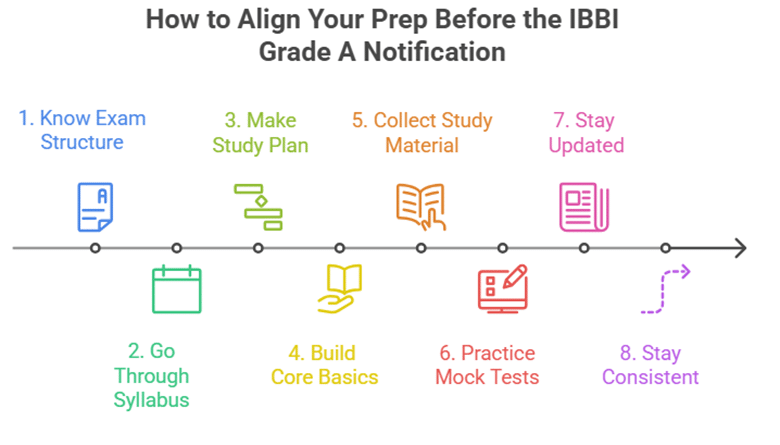
Step 1: Know the IBBI Grade A Exam Structure
Before diving deep into the preparation, you must know the detailed exam structure. The IBBI Grade A selection process usually includes:
- Phase 1 (Online Examination)
- Group Discussion (GD) + Interview
Phase 1 (Online Examination)
- Type: Multiple-choice questions (MCQs)
- Subjects: English Language, Quantitative Aptitude, Reasoning Ability, General Awareness, Economy & Financial Sector Awareness, and Insolvency and related laws
- Questions: 150
- Marks: 150
- Duration: 2 hours
Group Discussion (GD) + Interview
If you cleared the Phase 1 exam, you’ll be called for the group discussion:
- Mode: in-person
- GD Marks: 20
- Interview Marks: 30
Step 2: Go Through the IBBI Grade A Syllabus
The next step is to read through the detailed syllabus. The syllabus doesn’t change much every year, so referring to the previous IBBI Grade A syllabus gives you a clear idea of what to study.
Key Subjects to Focus On
- Reasoning and Quant: Logical puzzles, arithmetic, data interpretation, and problem-solving.
- English: Grammar, comprehension, and vocabulary.
- General Awareness: Banking, financial sector updates, government schemes, and economic reports.
- Finance: Financial markets, capital market instruments, banking system, and accounting basics.
- Economy: Growth, inflation, fiscal policy, balance of payments, and monetary policy.
- Law: Companies Act, Insolvency and Bankruptcy Code (IBC), and related financial regulations.
Step 3: Make a Smart Study Plan
You must create a study plan that is simple, practical, and adaptable. Instead of imposing a high-intensity schedule (like 10 hours), focus on the specific hours you can easily and reliably dedicate each day.
Weekly Plan Example
- Monday & Tuesday: Finance + Economics
- Wednesday & Thursday: Law + Insolvency Code
- Friday & Saturday: Quant + Reasoning + English
- Sunday: Revision + Sectional Quizzes + Mock Test
Daily Routine
- 2 hours: Select topic/s you’ll cover from the 1st subject
- 2 hours: Select topic/s you’ll cover from the 2nd subject
- 30 minutes: Reading current affairs or editorials
Step 4: Build Your Basics in Core Subjects
Before the notification, you have time, and your focus should be on building strong fundamentals rather than rushing through mock tests or cramming facts.
Finance and Economics
- Start with NCERT Economics (Class 11 & 12) for conceptual clarity.
- Read “Indian Economy” by Ramesh Singh.
- Understand key concepts like GDP, inflation, monetary policy, and financial inclusion.
Law (IBC & Related Acts)
- Go through the Insolvency and Bankruptcy Code (2016) and focus on structure, process, and key stakeholders.
- Read summaries of the Companies Act, FEMA, and RBI Act.
- Follow the IBBI official website for the latest circulars and amendments.
General Awareness
- Cover current affairs of the last 5–6 months, focused on the economy and finance.
- Read from trusted sources like PIB, Economic Times, and The Hindu Business Line.
Step 5: Collect Reliable Study Material
Having the right resources is more important than having too many. Stick to concise, exam-oriented materials.
Recommended Resources
- Finance: Indian Financial System by Bharti Pathak
- Economics: Indian Economy by Ramesh Singh or Sanjeev Verma
- Law: Bare Acts + IBBI publications
- English: Objective General English by S.P. Bakshi
- Reasoning & Quant: S. Aggarwal’s books
- Current Affairs: PIB, The Hindu, and monthly compilations
Important Note: Don’t collect multiple sources. Sticking to one resource per subject is enough if revised well.
Step 6: Practice Mock Tests
Here is how you can practice mock tests:
- Always set a strict timer to stimulate the actual exam environment.
- Take time to review your performance to identify your strengths and weaknesses
- Note down mistakes in a notebook to make sure not to repeat them
- Cover the basics of those topics that you solved incorrectly or find difficult to solve.
Step 7: Stay Updated with Current Affairs
Current affairs play a crucial role in GA, Economy, and Finance, and here is what you should focus on:
- Government schemes related to finance and MSMEs.
- Reports and indices by RBI, World Bank, IMF, etc.
- Key economic reforms and budget highlights.
- Insolvency and corporate law updates.
Step 8: Stay Consistent and Motivated
Preparation is not about studying hard for a few days; it’s about staying consistent every day.
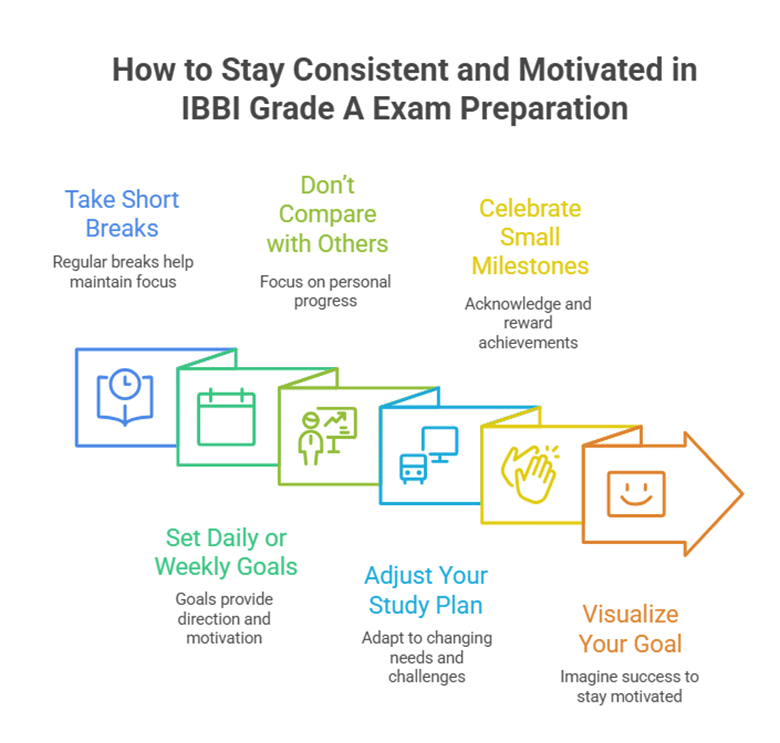
- Take short breaks to avoid burnout.
- Set daily or weekly goals and reward yourself when you achieve them.
- Don’t compare your journey with others.
- Adjust your study plan if something isn’t working
- Celebrate small milestones, such as finishing mock tests, improving mock scores, etc.
- Visualize your goal, i.e, IBBI Grade A officer.
Conclusion
Preparing for the IBBI Grade A exam before the notification gives you a solid edge over others. It allows you to build strong concepts, stay consistent, and revise effectively without the pressure of time.
Start early, stay disciplined, and trust your process.
When the notification is finally released, you won’t be starting your journey, rather you’ll already be halfway to success.
Observer Voice is the one stop site for National, International news, Sports, Editor’s Choice, Art/culture contents, Quotes and much more. We also cover historical contents. Historical contents includes World History, Indian History, and what happened today. The website also covers Entertainment across the India and World.

