

IIT Bombay Graduate Joins OpenAI After Departing Intel AI

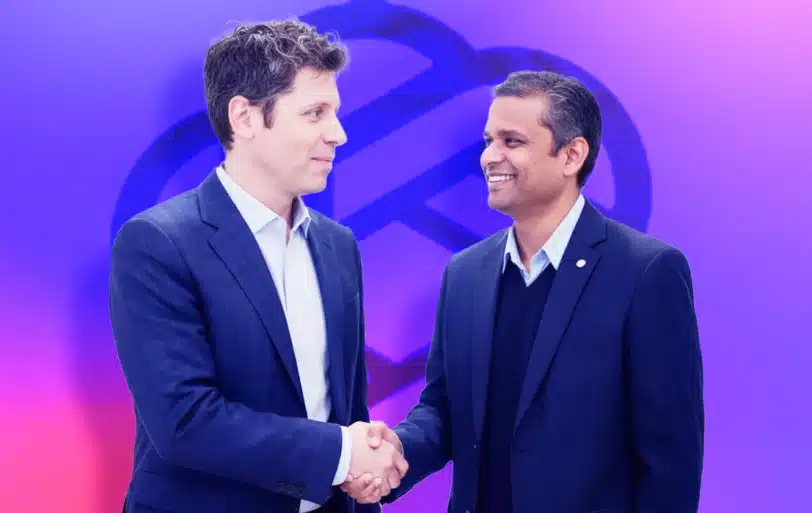
OpenAI has made headlines with the recruitment of Sachin Katti, a prominent IIT Bombay graduate and former Chief Technology Officer at Intel. Katti’s transition from Intel, where he played a crucial role in AI leadership, to OpenAI marks a significant shift in the tech landscape. This move highlights the growing trend of top AI talent gravitating toward companies at the forefront of artificial intelligence development, particularly those focused on advanced systems like ChatGPT.
Intel’s Transition and Katti’s Departure
Intel has officially confirmed Sachin Katti’s departure, stating that CEO Lip-Bu Tan will now lead the company’s AI and Advanced Technologies Group. This change comes amid a significant restructuring phase at Intel, which is striving to catch up with competitors like Nvidia in the rapidly expanding AI data-center market. Despite Intel’s historical dominance in the CPU sector, the company has struggled to produce a competitive alternative to Nvidia’s AI chips, a challenge that Katti was deeply involved in addressing before his exit. His departure signals not only a personal career shift but also reflects broader challenges faced by Intel in the evolving AI landscape.
Katti’s Enthusiastic Welcome at OpenAI
Upon joining OpenAI, Sachin Katti received an enthusiastic welcome from the organization. OpenAI President Greg Brockman expressed his excitement on social media, highlighting the importance of Katti’s expertise in designing the extensive compute infrastructure necessary for future artificial general intelligence (AGI) systems. Katti reciprocated the enthusiasm, expressing his gratitude for his time at Intel and his eagerness to contribute to OpenAI’s mission. This mutual excitement underscores the potential impact Katti could have on OpenAI’s ambitious projects.
A Multifaceted Career Path
Sachin Katti’s career is marked by a unique combination of academic achievement, entrepreneurial spirit, and leadership in the tech industry. After graduating from IIT Bombay, he earned his Ph.D. from MIT and later served as a professor at Stanford University, where he conducted groundbreaking research in wireless communication and networking. Katti also founded several successful technology startups, including Kumu Networks, known for its innovative self-interference cancellation technology, and Uhana, an AI-driven mobile network optimization platform that VMware later acquired. His extensive background in both academia and entrepreneurship has positioned him as a key player in the telecommunications sector, where he has contributed to the mainstream adoption of open, intelligent radio access networks.
The Future of AI Infrastructure
Katti’s arrival at OpenAI comes at a crucial time as the organization prepares to advance its AI capabilities. The development of the next generation of AI models demands unprecedented computing power, specialized networking, and hardware-software optimization at a scale that few engineers possess. Katti’s diverse expertise places him at the intersection of these critical areas, making him an invaluable asset for OpenAI. His transition from Intel to OpenAI reflects a broader industry trend where top AI engineers are increasingly moving away from traditional chipmakers to join AI labs that are shaping the future of technology. As OpenAI gears up for its next leap in artificial intelligence, Katti’s role will be essential in building the infrastructure necessary to support these advancements.
Observer Voice is the one stop site for National, International news, Sports, Editor’s Choice, Art/culture contents, Quotes and much more. We also cover historical contents. Historical contents includes World History, Indian History, and what happened today. The website also covers Entertainment across the India and World.
Follow Us on Twitter, Instagram, Facebook, & LinkedIn

