

RPF, NDRF, and IRIDM Sign MoU to Enhance Railway Disaster Response

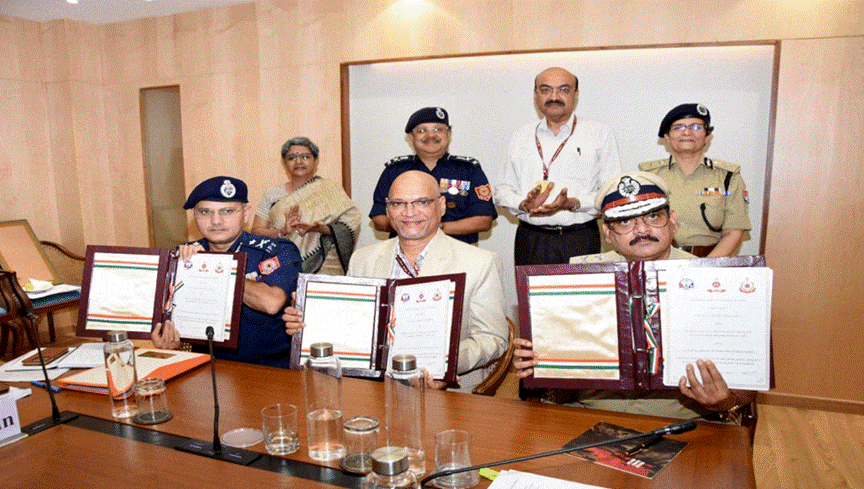
A significant partnership aimed at enhancing disaster response capabilities in the Indian railway system was formalized today with the signing of a tri-party Memorandum of Understanding (MoU) among the Railway Protection Force (RPF), the National Disaster Response Force (NDRF), and the Indian Railway Institute of Disaster Management (IRIDM) in New Delhi. This collaboration focuses on establishing a robust framework for integrated relief operations, emphasizing the critical “Golden Hour” for saving lives during railway accidents. The MoU was signed by key officials from each organization, marking a pivotal step towards improving disaster readiness and response efficiency.
Strengthening Disaster Response Framework
The newly signed MoU aims to create a structured approach to disaster management within the railway sector. By fostering collaboration among the RPF, NDRF, and IRIDM, the agreement seeks to enhance the operational readiness of these agencies during emergencies. The focus is particularly on the “Golden Hour,” the crucial period immediately following an accident when timely intervention can significantly impact survival rates. The signing ceremony was attended by senior officials, including Shri R. Rajagopal from the Railway Board, who underscored the importance of addressing both man-made and natural disasters in railway operations.
Collaboration and Capacity Building
Director General of the Railway Protection Force, Ms. Sonali Mishra, highlighted the necessity for effective coordination among all stakeholders involved in disaster management. She emphasized the need for standard operating procedures (SOPs) to streamline operations during emergencies. In his remarks, Shri Piyush Anand, DG of NDRF, called for a unified approach among various agencies to enhance disaster mitigation efforts. This collaboration is expected to lead to improved training and preparedness, ensuring that all personnel are equipped to respond effectively to emergencies.
Key Initiatives and Training Programs
The MoU outlines several key initiatives designed to improve disaster response capabilities. Among these is a focus on the “Golden Hour” rescue outcomes, which aims to reduce critical response times during emergencies. The RPF will develop specialized skills for confined-space rescues, ensuring that first responders can take appropriate actions immediately. Additionally, the IRIDM will standardize procedures for coach extrication, enhancing the efficiency of rescue operations. A progressive three-stage training schedule will also be implemented, providing foundational training, field sensitization, and advanced simulation-based modules to build measurable competencies among responders.
Future Prospects and Scalability
This partnership establishes a scalable framework that can be adapted across various Zonal Railways, promoting continuous improvement in disaster management practices. The roles of each organization are clearly defined, with JRRPFA serving as the central hub for training and coordination, while NDRF and IRIDM will collaborate on curriculum development and training execution. This strategic alliance is set to enhance the overall disaster readiness of the Indian railway system, ensuring that relief operations are faster, safer, and more coordinated when every second counts.
Observer Voice is the one stop site for National, International news, Sports, Editor’s Choice, Art/culture contents, Quotes and much more. We also cover historical contents. Historical contents includes World History, Indian History, and what happened today. The website also covers Entertainment across the India and World.
Follow Us on Twitter, Instagram, Facebook, & LinkedIn

