

Nikolai Noskov: Russian Rock Singer and Gorky Park Frontman

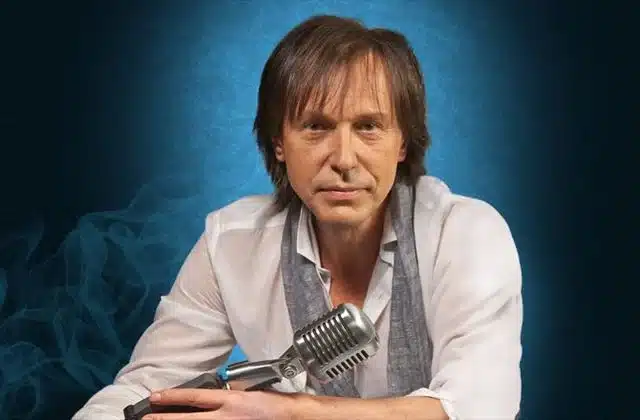
Nikolai Ivanovich Noskov (12 January 1956 – ) is a Russian singer and former frontman of the hard rock band Gorky Park. He is a five-time winner of the Golden Gramophone Award.
Early Life and Education
Noskov was born on 12 January 1956 in Gzhatsk, now renamed Gagarin, to a working-class family. His father, Ivan, worked at a meat-processing factory, and his mother, Yekaterina, worked as a milkmaid and construction site worker. His earliest musical influences came from folk music played on traditional Russian instruments and sung by his mother.
At age eight, Noskov and his family moved to Cherepovets in Vologda Oblast. After finishing school there, he served in the army. He initially attempted to play the bayan but gradually shifted his focus to singing, first in the school choir and later as a solo performer. At fourteen, he won a local singing contest. As lead singer of his school band, he performed songs by Western rock acts including the Beatles and Creedence Clearwater Revival, transcribing English lyrics phonetically into Cyrillic letters.
Noskov is a self-taught instrumentalist who plays guitar, piano, drums, and trumpet. He never received formal vocal training, though he applied to the Gnesinykh state musical college. His knowledge of musical notation is also self-taught.
Career and Achievements
After moving to Moscow, Noskov participated in several vocal-instrumental ensembles, including Rovesniki (Peers) and Nadezhda (Hope), though none held his interest for long. In 1980 he met composer David Tukhmanov, considered one of the Soviet Union’s most progressive musicians. Tukhmanov formed the hard rock band Moskva with Noskov as lead singer. The band released an album called NLO (UFO) but was suppressed by authorities and the press, as their sound proved too hard for Soviet audiences at the time. Despite its brief existence, this marked Noskov’s first professional studio experience.
In 1987 Noskov sang for the musical film Island of Lost Ships. After eight years of performing in Moscow restaurants and clubs, Stas Namin formed Gorky Park in 1987. The band emerged during a period of warming relations with the West. Following a festival performance headlined by the Scorpions, Gorky Park signed with Polygram records. Producer Bruce Fairbairn oversaw their self-titled debut album, which blended Russian cultural elements with hard rock and heavy metal. Noskov wrote the album’s lead single, “Bang!” The 1989 album achieved high chart positions on radio and MTV, and acquired gold status in Denmark. The band toured the United States and conducted interviews there.
In 1990, Noskov left Gorky Park due to financial difficulties, internal tensions, vocal strain, exhaustion, and family obligations. Alexander Minkov replaced him as lead vocalist while continuing as bassist.
Beginning in 1998, Noskov pursued a solo career, releasing six solo albums. His musical direction evolved from hard rock toward ethnic ballad art rock and funk. After his album Mother Russia, he transitioned from singing in English to performing in Russian for Russian audiences. His 1998 debut solo album was titled Blazh. In 2002, he established a foundation called Wild Honey to support ethnic music. His 2006 album Po poyas v nebe featured eastern musical motifs performed on the quray, a Bashkir reed flute. In 2011, he performed Magomaev’s song “Мелодия” on the television music show Property of the Republic and won the competition. In 2012, he recorded the album Без названия i.
Before his solo career, Noskov was a member of the Moscow ensemble in the early 1980s, the band Grand Prix in 1988, and the band Nikolai in the 1990s. In 2015, he served as a jury member on the second season of the reality television series Glavnaya Stsena.
Notable Events and Milestones
Noskov’s breakthrough came with Gorky Park’s formation in 1987 and the subsequent release of their self-titled album in 1989. The album’s success on Western radio and MTV, particularly in Denmark where it achieved gold status, represented a significant milestone for a Soviet rock band. His participation in American tours and media appearances marked a rare opportunity for a Russian rock musician during that era.
His departure from Gorky Park in 1990 marked a turning point. The decision to pursue a solo career from 1998 onward reflected deliberate artistic changes in his musical vision. His 2002 establishment of the Wild Honey foundation demonstrated a commitment to preserving ethnic music traditions.
Awards and Honors
Noskov is a five-time winner of the Golden Gramophone Award. In 2011, he won a competition on the television music show Property of the Republic for his performance of Magomaev’s song “Мелодия.”
Additional Resources
For more detailed information about Noskov’s life, career, and musical contributions, readers can consult Wikipedia and other biographical archives. His influence on Russian rock music and his evolution as a solo artist continue to be documented in music history resources and interviews.
Observer Voice is the one stop site for National, International news, Sports, Editor’s Choice, Art/culture contents, Quotes and much more. We also cover historical contents. Historical contents includes World History, Indian History, and what happened today. The website also covers Entertainment across the India and World.

