

Luigi Lablache: The Comic Bass of European Opera

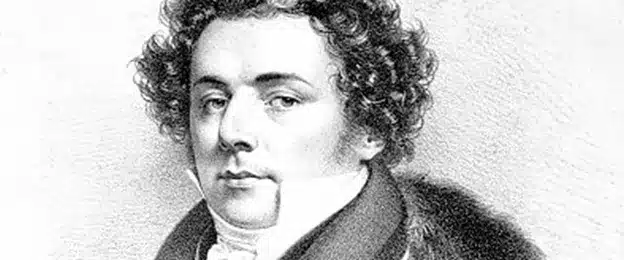
Luigi Lablache (6 December 1794 – 23 January 1858) was an Italian opera singer of French and Irish ancestry. He was most noted for his comic performances, possessing a powerful and agile bass voice and adroit acting skills, with Leporello in Don Giovanni as one of his signature roles.
Early Life and Education
Lablache was born in Naples, the son of Nicolas Lablache, a merchant from Marseille, and Rose Anne Maguire, an Irish woman. From 1806 he studied at the Conservatorio della Pietà de’ Turchini in Naples, where Gentili taught him music fundamentals and Giovanni Valesi instructed him in singing. He also learned violin and cello during his time there. He attempted to leave the Conservatorio five times to pursue acting, but was brought back each time. Before his voice broke, he sang solos in Mozart’s Requiem following Joseph Haydn’s death in 1809.
His voice transformed from a beautiful contralto into a magnificent bass. By age twenty, his range spanned two octaves from E-flat below to E-flat above the bass stave.
Career and Achievements
In 1812, at eighteen, Lablache was engaged at the Teatro di San Carlo in Naples and appeared in Valentino Fioravanti’s La Molinara. From 1812 to 1817 he sang at Palermo. In 1817 he took the role of Dandini in Rossini’s La Cenerentola at La Scala in Milan. The 1821 opera Elisa e Claudio, written for him by Saverio Mercadante, secured his position and his reputation spread throughout Europe.
After Milan, he performed in Turin, returned to Milan in 1822, appeared in Venice, and reached Vienna in 1824. Returning to Naples after twelve years, he created a sensation as Assur in Rossini’s Semiramide. On 30 March 1830, under Ebers’s management, he was first heard in London as Geronimo in Cimarosa’s Il matrimonio segreto, and thereafter appeared there annually while also singing in provincial festivals.
In 1827, Lablache met Franz Schubert at Beethoven’s funeral, where both served as torchbearers. Schubert wrote three Italian songs (Op. 83, D. 902) for Lablache, which were among the last songs Schubert ever composed. His chief roles included Leporello, Geronimo in La gazza ladra, Dandini in La Prova d’un’Opera Seria, Henry VIII in Anna Bolena, the Doge in Marino Faliero, and Oroveso in Norma. He created the title role in Donizetti’s Don Pasquale in 1843 and Massimiliano in Verdi’s I masnadieri in 1847. Late in his career he successfully performed as Shakespeare’s Caliban in Fromental Halévy’s La Tempesta and Gritzenko in Scribe and Meyerbeer’s L’étoile du nord.
Physically imposing, Lablache possessed an extraordinarily powerful voice capable of comic, humorous, tender, and sorrowful effects. As an actor he excelled equally in comic and tragic parts. In 1836/37 he taught singing to Princess Victoria of the United Kingdom, the later Queen Victoria.
Notable Events and Milestones
At Beethoven’s funeral in 1827, Lablache was one of thirty-two torchbearers surrounding the coffin and sang in Mozart’s Requiem. He performed the same Requiem at Chopin’s funeral in 1849 and sang a Lacrimosa at Bellini’s funeral in 1835.
Additional Resources
Lablache died at Naples on 23 January 1858 and was buried at Maisons-Laffitte, near Paris. He had married singer Teresa Pinotti in 1813 and had thirteen children, several of whom became singers. His eldest daughter Francesca married pianist Sigismond Thalberg in 1843, and his younger daughter Therese married opera singer Hans von Rokitansky. The actor Stewart Granger was his great-great-grandson. Further biographical details and context are available through Wikipedia and other opera history archives.
Observer Voice is the one stop site for National, International news, Sports, Editor’s Choice, Art/culture contents, Quotes and much more. We also cover historical contents. Historical contents includes World History, Indian History, and what happened today. The website also covers Entertainment across the India and World.
Follow Us on Twitter, Instagram, Facebook, & LinkedIn

