

Johann Bernoulli: Pioneer of Infinitesimal Calculus

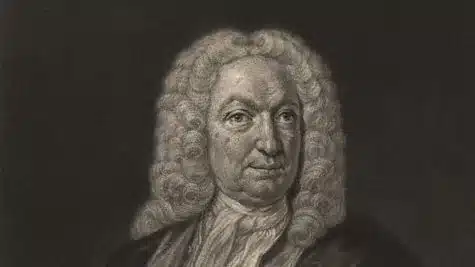
Johann Bernoulli (6 August 1667 – 1 January 1748) was a Swiss mathematician and one of the prominent members of the Bernoulli family. He is known for his fundamental contributions to infinitesimal calculus and for tutoring the young Leonhard Euler.
Early Life and Education
Johann was born in Basel, the son of Nicolaus Bernoulli, an apothecary, and Margaretha Schonauer. His father initially wanted him to study business and take over the family spice trade, but Johann persuaded him to allow mathematics and medicine instead. He enrolled at the University of Basel, where he began studying mathematics alongside his older brother Jacob Bernoulli. The two brothers spent considerable time mastering the newly discovered infinitesimal calculus and were among the first mathematicians to both understand and apply it to practical problems. In 1690, Johann completed a medical dissertation titled De Motu musculorum et de effervescentia et fermentatione, which was reviewed by Gottfried Leibniz.
Career and Achievements
After graduating from Basel University, Johann moved into teaching differential equations. In 1694, he married Dorothea Falkner, daughter of a Basel alderman, and soon accepted a professorship of mathematics at the University of Groningen. In 1705, at his father-in-law’s request, he began traveling back to Basel. Learning of his brother Jacob’s death from tuberculosis during the journey, Johann returned to assume Jacob’s former position as professor of mathematics at Basel University, rather than the Greek professorship he had originally planned to take.
As a student of Leibniz’s calculus, Bernoulli sided with Leibniz in the 1713 Leibniz–Newton debate, defending Leibniz by demonstrating that Leibniz’s methods had solved problems Newton’s approach had failed to address. Bernoulli also promoted Descartes’ vortex theory over Newton’s theory of gravitation, a stance that delayed acceptance of Newton’s ideas in continental Europe.
Notable Events and Milestones
In 1696, Johann presented the brachistochrone curve problem—determining the path a particle follows between two points in the shortest time under gravity alone—and offered a reward for its solution. He proposed the cycloid as the answer and noted its relation to light rays passing through layers of varying density. His brother Jacob submitted the same solution, but Johann’s derivation was flawed; he later presented Jacob’s correct derivation as his own.
In 1724, Johann entered a competition sponsored by the French Académie Royale des Sciences concerning the laws of motion for hard bodies. His entry, which defended a Leibnizian view, was disqualified for the prize (won by Maclaurin) because it postulated an infinite external force. However, when the Académie reopened the competition in 1726 for papers on elastic bodies, Bernoulli’s work received an honourable mention alongside the prize winner, Pierre Mazière.
Johann was hired by Guillaume de l’Hôpital for private mathematics tutoring under a contract granting l’Hôpital rights to use Bernoulli’s discoveries. L’Hôpital published the first textbook on infinitesimal calculus, Analyse des Infiniment Petits pour l’Intelligence des Lignes Courbes (1696), which drew heavily from Bernoulli’s work, including what became known as l’Hôpital’s rule. Bernoulli later complained to Leibniz, Varignon, and others that he had not received sufficient credit, though l’Hôpital’s preface acknowledged his debt to Bernoulli’s insights.
A competitive relationship developed between Johann and his talented son Daniel. In 1738 and 1743, father and son published separate works on hydrodynamics—Daniel’s Hydrodynamica and Johann’s Hydraulica—nearly simultaneously. Johann deliberately falsely predated his work by six years to claim precedence over his son.
Awards and Honors
Johann Bernoulli received an honourable mention from the French Académie Royale des Sciences in both the 1724 and 1726 competitions on mechanics and elastic bodies.
Additional Resources
Johann Bernoulli’s life and mathematical contributions are documented in detail through Wikipedia and other biographical archives. His role in the early development of calculus, his disputes with contemporaries and family members, and his influence on the next generation of mathematicians—particularly Leonhard Euler—remain central to the history of mathematics in the late seventeenth and early eighteenth centuries.
Observer Voice is the one stop site for National, International news, Sports, Editor’s Choice, Art/culture contents, Quotes and much more. We also cover historical contents. Historical contents includes World History, Indian History, and what happened today. The website also covers Entertainment across the India and World.

