

Greta Garbo: Hollywood’s Silent-Era Icon

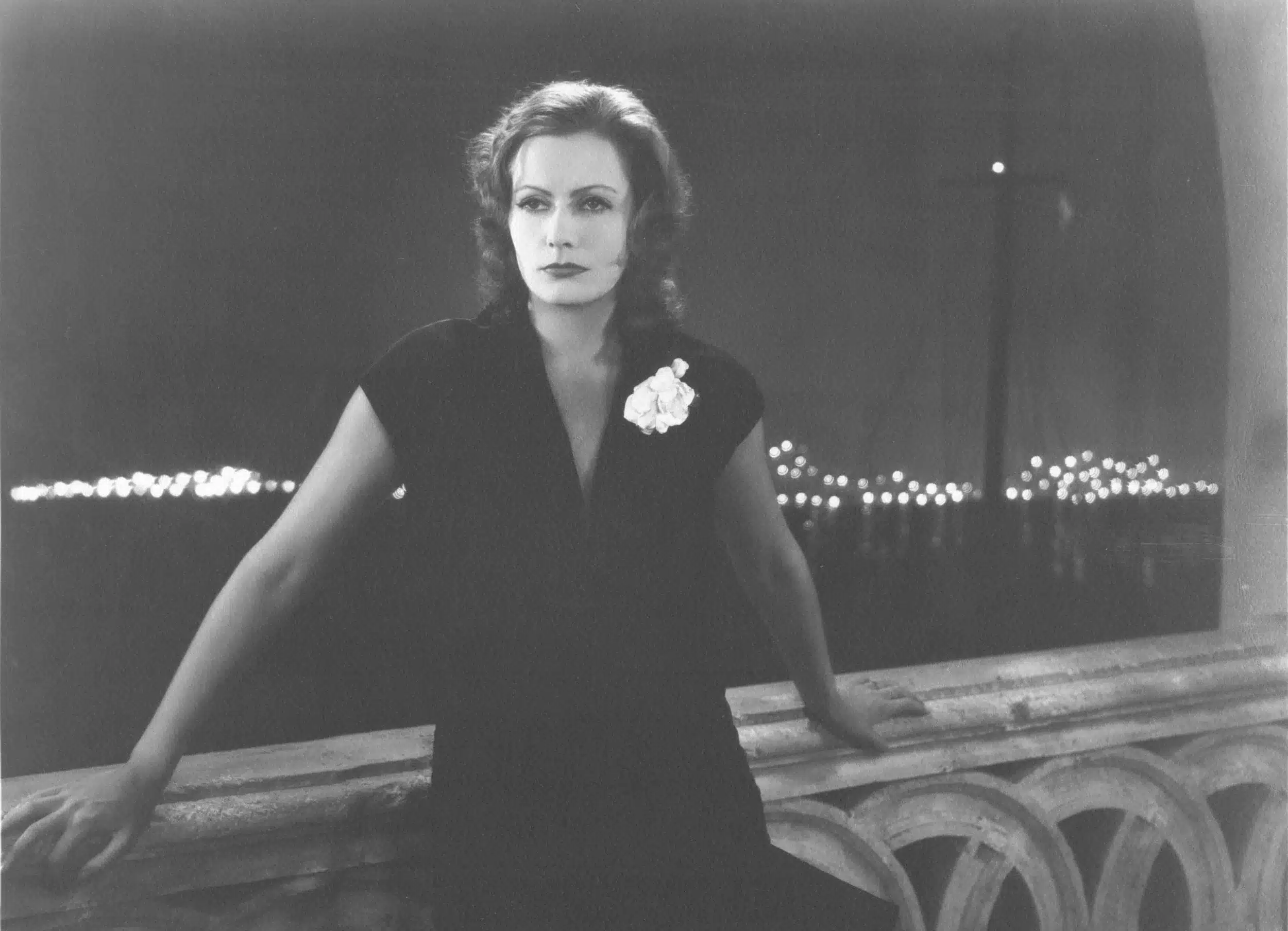
Greta Garbo (18 September 1905 – 15 April 1990) was a Swedish and American film actress. She was one of the greatest screen actresses of all time, known for her melancholic screen persona and subtle performances across Hollywood’s silent and early golden eras.
Early Life and Education
Greta Lovisa Gustafsson was born in Södermalm, Stockholm, Sweden, the youngest of three children. Her father, Karl Alfred Gustafsson, worked as a street cleaner, grocer, factory worker, and butcher’s assistant; her mother, Anna Lovisa, worked at a jam factory. The family lived in poverty in a three-bedroom cold-water flat in a working-class district. Garbo was nicknamed Kata as a child, a mispronunciation of her own name that stuck for her first ten years.
She was a shy daydreamer who disliked school but showed early interest in theatre, directing her friends in make-believe games and performances. She participated in amateur theatre and attended the Mosebacke Theatre. At 13, she graduated from school without advancing to high school, an experience she later said created an inferiority complex. In 1919, the Spanish flu swept Stockholm; her father became ill and lost his job. Garbo cared for him until his death in 1920, when she was 14.
Career and Achievements
After leaving school, Garbo worked as a soap-lather girl in a barber shop, then took jobs at the PUB department store running errands and working in the millinery department. She modeled hats for store catalogues and became a fashion model at Nordiska Kompaniet. In 1920, a film commercial director cast her in advertisements for women’s clothing.
Garbo launched her film career with a supporting role in the Swedish film The Saga of Gösta Berling (1924). Her performance caught the attention of Louis B. Mayer, chief executive of Metro-Goldwyn-Mayer, who brought her to Hollywood in 1925. Her first American silent film, Torrent (1926), stirred public interest, but her third American film, Flesh and the Devil (1926), made her an international star. By 1928, her success in A Woman of Affairs elevated her to MGM’s highest box-office star, surpassing Lillian Gish. Other notable silent-era films included The Mysterious Lady (1928), The Single Standard (1929), and The Kiss (1929).
With her first sound film, Anna Christie (1930), MGM marketed her arrival in talkies with the tagline “Garbo talks!” That year she also starred in Romance. By 1932, her success allowed her to dictate contract terms and become selective about roles. She continued in Mata Hari (1931), Susan Lenox (Her Fall and Rise) (1931), Grand Hotel (1932), Queen Christina (1933), and Anna Karenina (1935).
Critics and film historians regard her 1936 performance as the courtesan Marguerite Gautier in Camille as her finest work. However, her career declined, and she was labeled box office poison in 1938. A turn to comedy in Ninotchka (1939) revived her career. Two-Faced Woman (1941), which received poor reviews, was her last of 28 feature films. She declined most subsequent offers and those she accepted either failed to materialize or she withdrew during filming.
Notable Events and Milestones
Garbo received four Academy Award nominations for Best Actress: combined nominations for Anna Christie and Romance (1930), a nomination for Camille (1936), and a nomination for Ninotchka (1939). In 1954, she was awarded an Academy Honorary Award “for her luminous and unforgettable screen performances.” In 1999, the American Film Institute ranked her fifth on its list of the greatest female stars of classic Hollywood cinema.
After Two-Faced Woman, Garbo withdrew from public life entirely. She declined all opportunities to return to the screen and shunned publicity, leading a private life as an art collector. Her collection included works by Pierre-Auguste Renoir, Pierre Bonnard, and Kees van Dongen. Four years before her death, she told Swedish biographer Sven Broman: “I was tired of Hollywood. I did not like my work. There were many days when I had to force myself to go to the studio … I really wanted to live another life.”
Awards and Honors
Garbo received four Academy Award nominations for Best Actress during her career. In 1954, she was presented with an Academy Honorary Award recognizing her luminous and unforgettable screen performances. The American Film Institute ranked her fifth among the greatest female stars of classic Hollywood cinema in 1999.
Additional Resources
Greta Garbo’s life and career are documented extensively in film archives, biographical works, and historical records. Readers seeking deeper insight into her performances, personal life, and lasting influence on cinema can find comprehensive information through Wikipedia and other biographical resources dedicated to classic Hollywood history.
Observer Voice is the one stop site for National, International news, Sports, Editor’s Choice, Art/culture contents, Quotes and much more. We also cover historical contents. Historical contents includes World History, Indian History, and what happened today. The website also covers Entertainment across the India and World.

