

George Westinghouse: Pioneer of Modern Power and Rail Safety

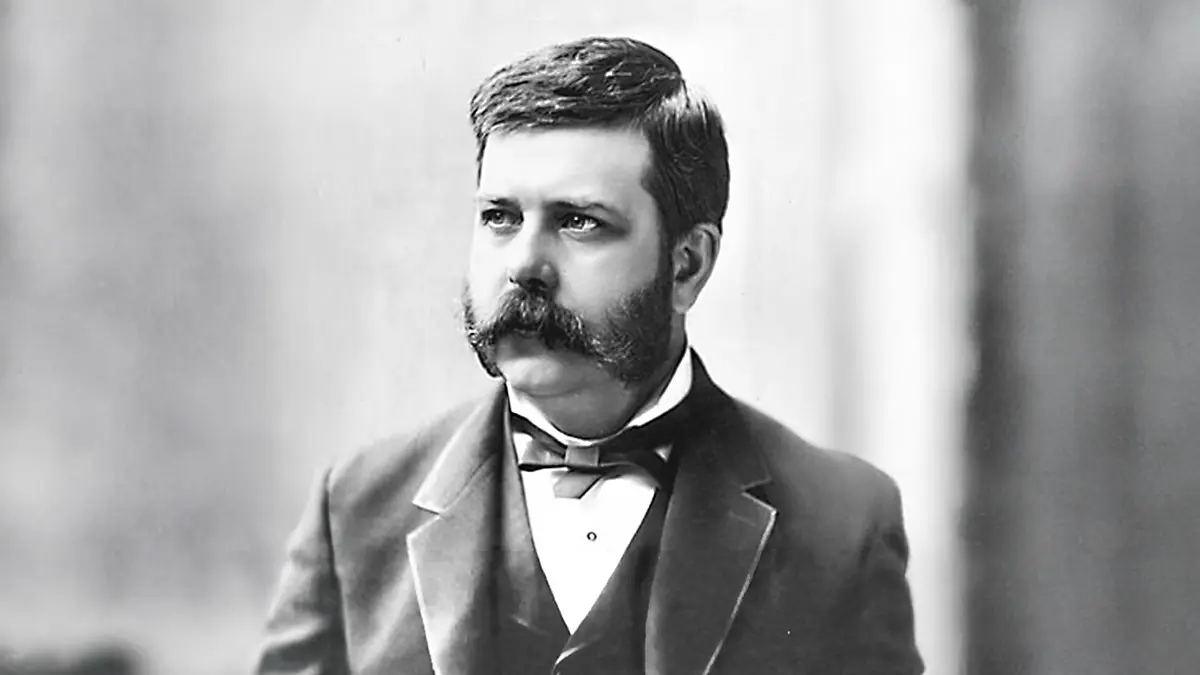
George Westinghouse Jr. (October 6, 1846 – March 12, 1914) was an American inventor, engineer, and industrialist based in Pittsburgh, Pennsylvania. He revolutionized both railroad safety and electrical power distribution, receiving 360 patents and founding 61 companies during his lifetime.
Early Life and Education
Westinghouse was born in Central Bridge, New York, the son of Emeline (Vedder) and George Westinghouse Sr., a farmer and machine shop owner. His ancestors had emigrated from Westphalia in Germany, with the family name anglicized from Wistinghausen. From youth, he displayed talent for machinery and business, working in his father’s workshop, which produced farm equipment including the Westinghouse Farm Engine.
At the outbreak of the Civil War in April 1861, the 14-year-old attempted to enlist but was stopped by his father. In June 1863, his parents allowed him to join the 12th Regiment of the New York National Guard, followed by the 16th Regiment of the New York Cavalry, where he earned promotion to corporal before honorable discharge in November 1863. He then served in the Union Navy as an Acting Third Assistant Engineer on the gunboat USS Muscoota and the ship USS Stars and Stripes, participating in blockades of Southern ports until his discharge in August 1865.
After the war, Westinghouse enrolled at Union College in Schenectady but left during his first term, returning instead to develop his skills in his father’s workshop.
Career and Achievements
Westinghouse received his first patent at age 19 for a rotary steam engine. At 21, he invented a car replacer—a device to guide derailed railroad cars back onto tracks—and a reversible rail junction piece called a “frog” for switching trains between different tracks. In 1868, he moved to Pittsburgh with his wife to access better and less expensive steel for manufacturing railroad equipment and to develop his railroad air brake concept.
In 1869, at age 23, Westinghouse publicly demonstrated his revolutionary compressed air braking system in Pittsburgh. The initial design used an air compressor and reservoir in the locomotive with a single compressed air pipe running the length of the train, allowing the engineer to apply and release brakes simultaneously on all cars. A charter for what became the Westinghouse Air Brake Company was filed in July 1869. Over the next two years, Westinghouse and his engineers improved the design by inverting the process, using valves that kept brakes disengaged under constant pressure while automatically stopping the train if the air line ruptured or disconnected.
Building on these successes, Westinghouse expanded into railway signaling and track-switching systems during the 1870s. He founded the Union Switch and Signal Company in May 1881 to manufacture and maintain these systems, replacing manual switching and oil lamp signaling with automated alternatives.
In the early 1880s, Westinghouse developed inventions for the safe production, transmission, and use of natural gas, creating an entirely new energy industry. Recognizing the potential of alternating current (AC) for electric power distribution, he founded the Westinghouse Electric Corporation in 1886. His company competed directly with Thomas Edison’s direct current (DC) system. Westinghouse Electric secured the contract to showcase its AC system illuminating the “White City” at the 1893 Columbian Exposition in Chicago. The company then installed the world’s first large-scale AC power generation plant at Niagara Falls, New York, which opened in August 1895.
Notable Events and Milestones
Westinghouse’s first public demonstration of his air brake system in Pittsburgh in 1869 marked a turning point for railroad safety. The system prevented a serious accident in front of assembled witnesses, though the initial design required refinement. His improved fail-safe design, completed within two years, became the industry standard.
The 1893 Columbian Exposition in Chicago represented a major milestone for Westinghouse Electric, as winning the contract to light the “White City” with AC power demonstrated the viability of his electrical system over Edison’s competing DC approach. The opening of the Niagara Falls power plant in August 1895 further validated AC technology on a large scale.
Awards and Honors
In 1911, Westinghouse received the Edison Medal of the American Institute of Electrical Engineers “for meritorious achievement in connection with the development of the alternating current system.”
Additional Resources
Westinghouse’s contributions to railroad safety, electrical power distribution, and natural gas technology fundamentally shaped modern infrastructure. His birthplace and boyhood home in Central Bridge, New York, remain documented historical sites. More detailed information about his life, patents, and companies is available through Wikipedia and other biographical archives.
Observer Voice is the one stop site for National, International news, Sports, Editor’s Choice, Art/culture contents, Quotes and much more. We also cover historical contents. Historical contents includes World History, Indian History, and what happened today. The website also covers Entertainment across the India and World.
Follow Us on Twitter, Instagram, Facebook, & LinkedIn

