

Breakthrough Semiconductor Generates Unprecedented Thermoelectric Voltages

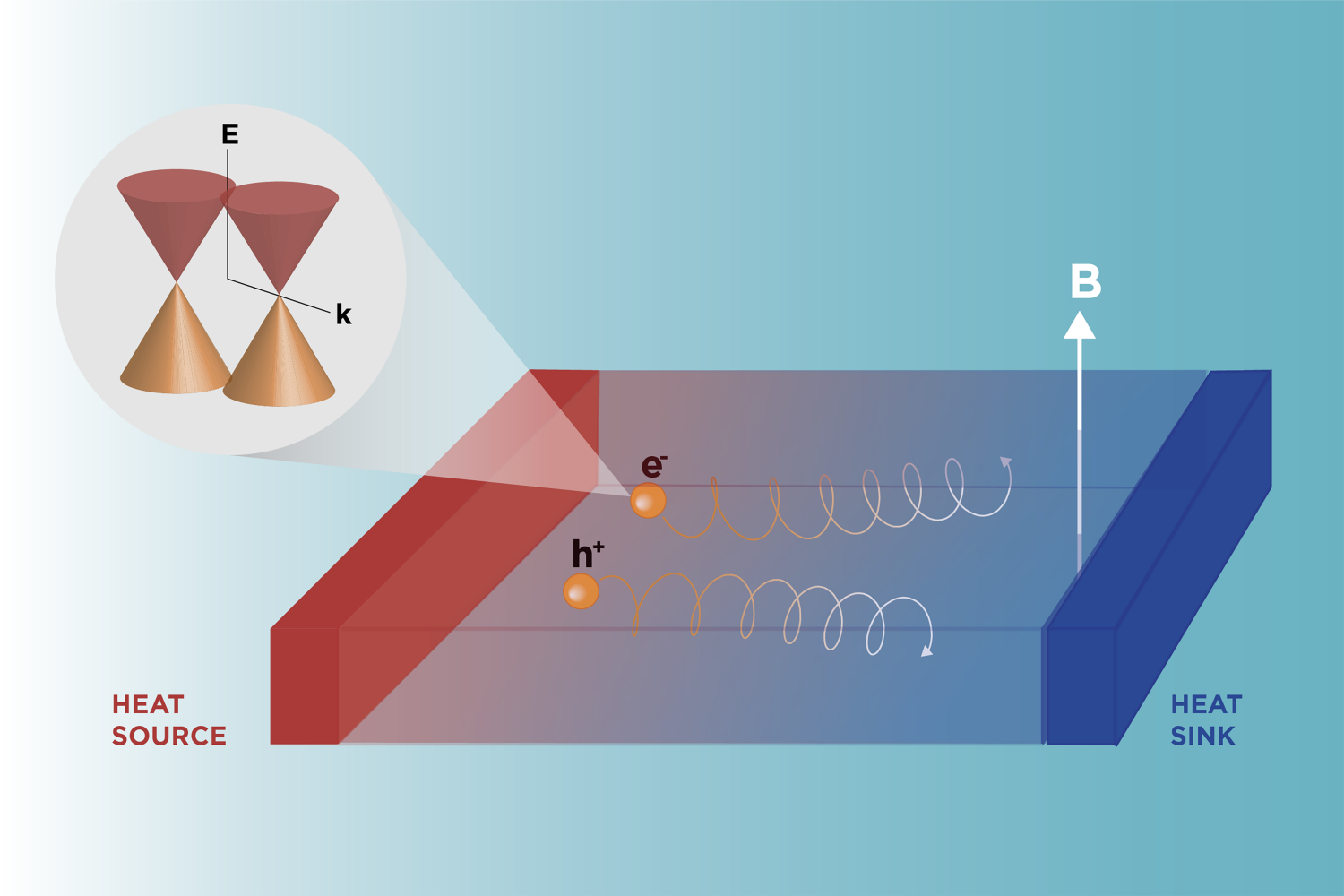
In a groundbreaking discovery, scientists have developed a crystalline semiconductor that produces electrical voltage from temperature differences at levels nearly a thousand times greater than previously thought possible. This remarkable finding challenges long-held assumptions about thermoelectric effects in solids, paving the way for advancements in sensitive temperature sensing and quantum devices.
The researchers, hailing from the Jawaharlal Nehru Centre for Advanced Scientific Research (JNCASR) in India, the University of Sydney, and the Indian Institute of Science (IISc) in Bangalore, unveiled that their innovation exceeds the voltage limits defined in science textbooks. Unlike traditional materials, which produce minimal voltage, this new semiconductor generates quantities akin to those found in liquid electrolytes.
Revolutionizing the Seebeck Effect
The phenomenon behind this discovery stems from something known as the Seebeck effect, where a voltage is created when one end of a junction between two different materials is heated while the other side remains cool. This principle, discovered over 200 years ago, has been integral to technologies such as temperature sensors and thermoelectric generators that turn waste heat into usable electricity.
Historically, the maximum measurable voltage—designated as the Seebeck coefficient—has been constrained to a few millivolts per Kelvin within solid crystalline structures. Typical materials generate only tens of microvolts to a few hundred microvolts per Kelvin, leaving the field of liquid systems, like ionic gels, to dominate voltages in the millivolts-per-Kelvin range.
Innovative Material Development
Led by Professor Bivas Saha, the team synthesized thin films of scandium nitride (ScN), using ultrahigh-vacuum magnetron sputtering on magnesium oxide substrates. By strategically doping these films with magnesium to mitigate naturally occurring free electrons due to oxygen impurities, the researchers created a heavily doped, highly compensated (HDHC) semiconductor. This configuration resulted in a uniform distribution of both positively and negatively charged dopant atoms within the crystal.
Furthermore, their measurements revealed Seebeck coefficients exceeding –124.6 millivolts per Kelvin, a figure that places this discovery well above both the previous solid-state limits and those typical of liquid systems. As the thickness of the HDHC ScN films decreased, the thermoelectric effect intensified.
Potential Applications and Future Directions
The team has also experimented with a prototype photon sensor, which demonstrated a Seebeck response of -102.4 millivolts per Kelvin when stimulated by laser light. This promising output suggests practical applications in classical light detection and potentially in single-photon detection as efficiencies rise.
Published in the prestigious journal Science, these findings not only suggest advancements in temperature sensing and thermal imaging but also highlight the potential for innovative devices for the Internet of Things (IoT) and applications in quantum technologies. Professor Saha noted that their work demonstrates the extraordinary possibilities that engineered disorder can provide in enhancing thermoelectric performance.
Observer Voice is the one stop site for National, International news, Sports, Editor’s Choice, Art/culture contents, Quotes and much more. We also cover historical contents. Historical contents includes World History, Indian History, and what happened today. The website also covers Entertainment across the India and World.

