

Bessie Smith: Empress of the Blues

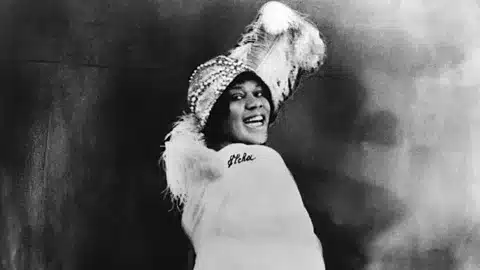
Bessie Smith (April 15, 1892 – September 26, 1937) was an African-American blues singer widely renowned during the Jazz Age. Nicknamed the “Empress of the Blues,” she was the most popular female blues singer of the 1930s and is often regarded as one of the greatest singers of her era.
Early Life and Education
Smith was born in Chattanooga, Tennessee. Her father, William Smith, was a laborer and part-time Baptist preacher who died when she was too young to remember him. By age nine, her mother and a brother had also died, leaving her older sister Viola to care for the remaining siblings. Smith received no formal education due to her parents’ deaths and the family’s poverty.
To help support the household, Bessie and her brother Andrew performed on the streets of Chattanooga, singing and dancing for pennies in front of the White Elephant Saloon at Thirteenth and Elm streets. In 1912, her oldest brother Clarence returned to Chattanooga with a traveling troupe owned by Moses Stokes and arranged an audition for Bessie. She was hired as a dancer, not a vocalist, since the company already featured popular singer Ma Rainey. While Ma Rainey did not teach Smith to sing, she likely helped her develop stage presence. Smith eventually moved into chorus lines, making Atlanta’s “81” Theatre her home base and performing on the black-owned Theater Owners Booking Association (T.O.B.A.) circuit.
Career and Achievements
Smith began forming her own act around 1913 at Atlanta’s “81” Theater. By 1920, she had established a reputation in the South and along the East Coast. The success of Mamie Smith’s “Crazy Blues” in 1921 opened a new market for blues recordings, and Smith capitalized on this opportunity by beginning her recording career in 1923.
Columbia Records signed Smith in 1923 under talent agent Frank Walker, who had seen her perform years earlier. Her first recording session took place on February 15, 1923, engineered by Dan Hornsby. Her debut record paired “Downhearted Blues” with “Gulf Coast Blues,” and both sides became hits. On September 26, 1923, her “Cemetery Blues” became the first record issued in Columbia’s new “race records” series.
As her popularity soared, Smith became the top attraction on the T.O.B.A. circuit in the 1920s. She became the highest-paid black entertainer of her day, working heavy theater schedules in winter and tent shows the rest of the year. She traveled in her own 72-foot-long railroad car. Columbia’s publicity department called her “Queen of the Blues,” but the national press upgraded her title to “Empress of the Blues.” Her music stressed independence, fearlessness, and sexual freedom, arguing that working-class women did not need to alter their behavior to deserve respect.
Smith’s contralto voice recorded well from her first acoustic session. When electrical recording technology arrived, the power of her voice became even more apparent. Her first electrical recording, “Cake Walking Babies [From Home],” was recorded on May 5, 1925. Despite her success, she faced discrimination; Black Swan Records dismissed her as too rough after an audition, surprised when she later became far more successful than their preferred artist Mamie Smith.
Notable Events and Milestones
Smith’s recording career with Columbia Records began in February 1923 and quickly established her as a major force in blues music. Her debut records became immediate hits, and she rose to prominence throughout the 1920s as the most popular female blues singer of the era. Her influence extended beyond blues to jazz vocalists and fellow blues singers of her time.
Awards and Honors
Smith was inducted into the Rock and Roll Hall of Fame in 1989, cementing her legacy as one of the greatest singers of the Jazz Age.
Additional Resources
Bessie Smith’s life and career are documented in greater detail through the Rock and Roll Hall of Fame archives, biographical databases, and comprehensive blues history resources. Her recordings remain widely available and continue to be studied as essential works in American music history.
Observer Voice is the one stop site for National, International news, Sports, Editor’s Choice, Art/culture contents, Quotes and much more. We also cover historical contents. Historical contents includes World History, Indian History, and what happened today. The website also covers Entertainment across the India and World.

