

Rupert Brooke: English Poet of War and Beauty

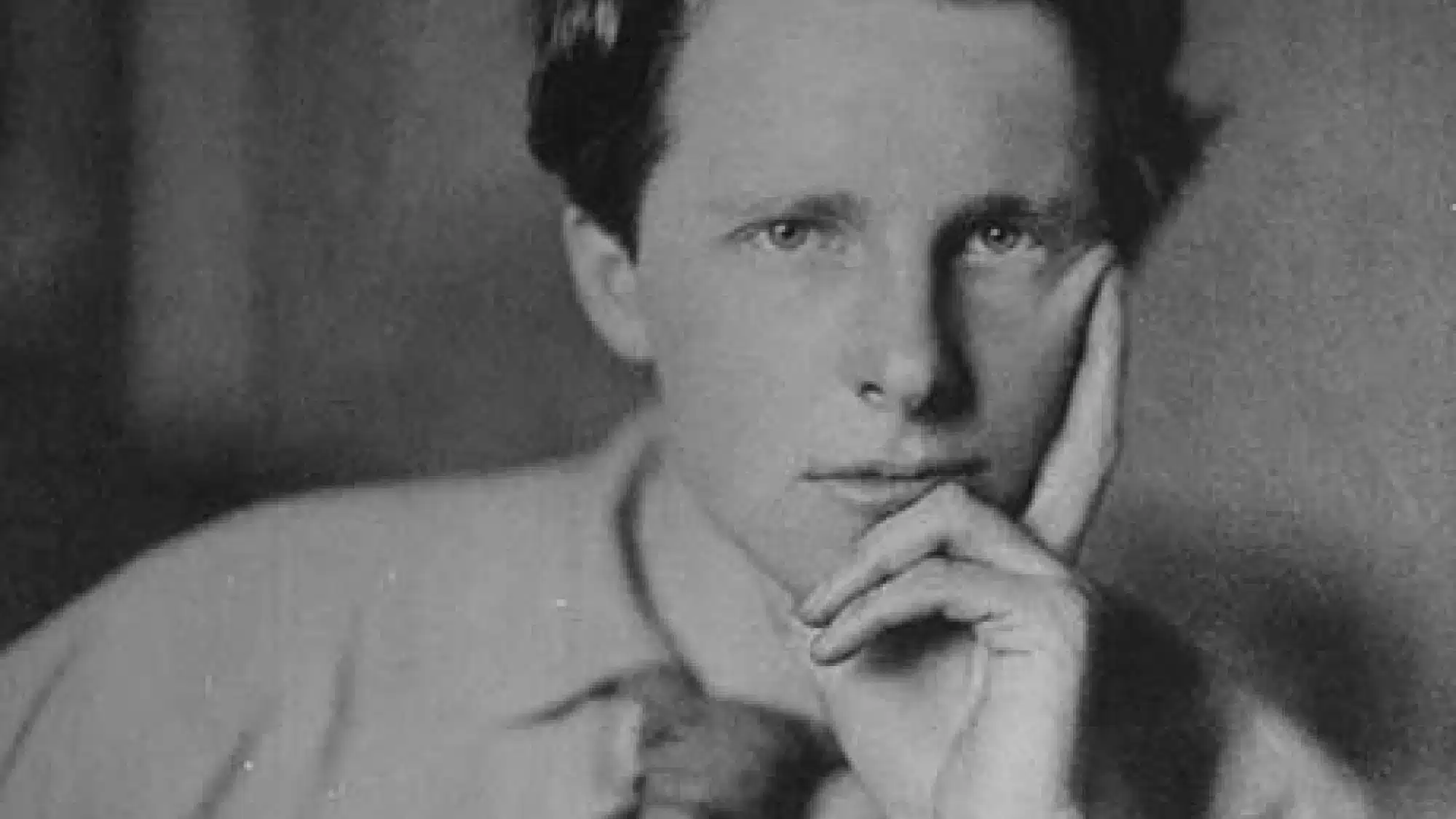
Rupert Chawner Brooke (3 August 1887 – 23 April 1915) was an English poet known for his idealistic war sonnets written during the First World War, such as “The Dead” and “The Soldier”. He died of septicaemia following a mosquito bite whilst aboard a French hospital ship moored off the island of Skyros in the Aegean Sea.
Early Life and Education
Brooke was born at 5 Hillmorton Road, Rugby, Warwickshire, on 3 August 1887, the third of four children. His father, William Parker Brooke, was a schoolmaster, and his mother, Ruth Mary Brooke (née Cotterill), was a school matron. Both were working at Fettes College in Edinburgh when they met and married on 18 December 1879. After his father’s resignation, the family moved to Rugby, where he became Master of School Field House at Rugby School. Brooke’s eldest brother, Richard England Brooke, died of pneumonia in 1907 at age 26; his youngest brother, William Alfred Cotterill Brooke, was born in 1891.
He attended Hillbrow preparatory school locally, then Rugby School, where he played rugby football and formed romantic attachments to fellow pupils. In October 1906, Brooke went up to King’s College, Cambridge, to study classics. At Cambridge, he became a member of the Apostles, was elected president of the university Fabian Society, helped found the Marlowe Society drama club, and acted in the Cambridge Greek Play. Among his Cambridge friends was George Mallory. Virginia Woolf later told Vita Sackville-West that she had gone skinny-dipping with Brooke in a moonlit pool while they were in Cambridge together.
Career and Achievements
Brooke made friends among the Bloomsbury group of writers and belonged to the Georgian Poets. He was one of the most important of the Dymock poets, associated with the Gloucestershire village of Dymock, a group that included Robert Frost and Edward Thomas. He lived at The Orchard, Grantchester, from 1909 to 1911, and at The Old Vicarage, Grantchester, from 1911 to 1912. While travelling in Europe, he prepared a thesis entitled “John Webster and the Elizabethan Drama”, which earned him a fellowship at King’s College, Cambridge, in March 1913.
Brooke’s personal life was marked by several romantic involvements. He had a relationship with Élisabeth van Rysselberghe, daughter of painter Théo van Rysselberghe, whom he met in 1911 in Munich. He was also romantically involved with the artist Phyllis Gardner and the actress Cathleen Nesbitt, and was once engaged to Noël Olivier, whom he met at Bedales School when she was aged 15. In 1912, Brooke suffered a severe emotional crisis resulting from the breakdown of his long relationship with Ka Cox. His paranoia that Lytton Strachey had schemed to destroy this relationship precipitated his break with his Bloomsbury group friends and contributed to a nervous collapse.
As part of his recuperation, Brooke toured the United States and Canada to write travel diaries for The Westminster Gazette. He took the long way home, sailing across the Pacific and staying some months in the South Seas. It was later revealed that he may have fathered a daughter with a Tahitian woman named Taatamata. Edward Marsh brought Brooke to the attention of Winston Churchill, then First Lord of the Admiralty, and his accomplished poetry gained many enthusiasts and followers.
Notable Events and Milestones
Brooke joined the Royal Navy after the outbreak of war in August 1914, and was commissioned into the Royal Naval Volunteer Reserve as a temporary sub-lieutenant shortly after his 27th birthday. He was assigned to the Royal Naval Division, an infantry division consisting of Royal Navy and Royal Marine personnel not needed at sea, and took part in the siege of Antwerp in early October 1914.
Brooke came to public attention as a war poet early in 1915, when The Times Literary Supplement published two sonnets—”IV: The Dead” and “V: The Soldier”—on 11 March. His death on 23 April 1915 from septicaemia following a mosquito bite occurred whilst he was aboard a French hospital ship moored off the island of Skyros in the Aegean Sea.
Awards and Honors
Brooke was elected a fellow of King’s College, Cambridge, in March 1913 on the strength of his thesis on John Webster and Elizabethan drama. A blue plaque was later placed at The Orchard, Grantchester, commemorating his residence and work there from 1909 to 1912.
Additional Resources
Rupert Brooke’s life and literary legacy continue to be studied through his published poetry, correspondence, and the biographical accounts available in archives and scholarly works. Readers seeking more detailed information about his life, relationships, and wartime poetry are encouraged to consult Wikipedia and other biographical resources that document this influential English poet’s brief but significant career.
Observer Voice is the one stop site for National, International news, Sports, Editor’s Choice, Art/culture contents, Quotes and much more. We also cover historical contents. Historical contents includes World History, Indian History, and what happened today. The website also covers Entertainment across the India and World.

