

Arthur Fadden: Australia’s Shortest-Serving Prime Minister

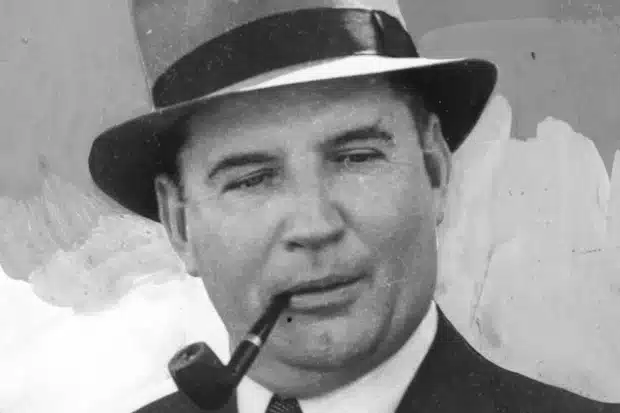
Arthur William Fadden (13 April 1894 – 21 April 1973) was an Australian politician who served as the 13th prime minister of Australia. He held the office for just 39 days, from 29 August to 7 October 1941, making him one of the shortest-serving prime ministers in the nation’s history.
Early Life and Education
Fadden was born in Ingham, Queensland, on 13 April 1894, the eldest of ten children born to Irish immigrant parents Annie Moorhead and Richard John Fadden. His mother was from County Tyrone and his father from County Galway. The family moved to Walkerston while Fadden was young, where his father served as officer-in-charge of the local police station.
Fadden received his formal education at Walkerston State School and briefly at Te Kowai. He left school at age 15 and worked various jobs, including collecting cane beetles, performing sound effects at the local cinema, and as a “billy boy” on cane-cutting gangs. He later became an office boy at the Pleystowe Sugar Mill, where he worked alongside two future Labor MPs. In his spare time, he developed an interest in theatre as both performer and treasurer of the local company.
Career and Achievements
In April 1913, Fadden moved to Mackay as assistant town clerk of the Mackay Town Council, defeating 56 other applicants. In 1916, after uncovering theft allegations against his superior Frederick Morley, Fadden was promoted to town clerk, again winning selection over more than 50 competitors. He became reputedly the youngest town clerk in Australia at that time.
Following the devastating 1918 Mackay cyclone, Fadden resigned as town clerk and relocated to Townsville, where he established an accountancy firm after qualifying through a correspondence course. His business initially struggled, but he discovered an unused tax code loophole that gave him competitive advantage. His firm eventually prospered, allowing him to take on partners and open a second office in Brisbane. In 1930, he was elected to the Townsville City Council as part of a non-partisan group called the “serviceable six.” He gained further public attention by publicly criticizing the city’s chief engineer, Sidney Roberts, for sourcing coal from New South Wales instead of local Bowen Basin mines, and later used his auditing skills to expose inconsistencies in Roberts’s balance sheets, leading to Roberts’s dismissal.
Fadden entered state politics in 1932 when elected to the Queensland Legislative Assembly for the Country and Progressive National Party, but lost his seat in 1935. The following year, he won a federal by-election for the Division of Darling Downs. In March 1940, Prime Minister Robert Menzies appointed him minister without portfolio. Following the deaths of three senior ministers in an air crash, Fadden took over as Minister for Air and Minister for Civil Aviation. In October 1940, he was elected acting leader of the Country Party as a compromise candidate after a deadlocked leadership vote between Earle Page and John McEwen, becoming de facto deputy prime minister and being promoted to treasurer.
Fadden served as acting prime minister for four months in early 1941 while Menzies was in Europe, earning popularity for his conciliatory manner. He became official leader of the Country Party following a ballot in March 1941. When Menzies resigned as prime minister in August 1941 after losing the confidence of his ministry, Fadden was elected leader of the United Australia Party–Country coalition and became prime minister. His tenure lasted only 39 days before John Curtin’s Labor Party successfully moved a motion of no confidence with support from two independents.
After losing the prime ministership, Fadden remained leader of the opposition for two more years before resigning in favor of Menzies following the coalition’s massive defeat at the 1943 election. When Menzies returned as prime minister in 1949, Fadden became treasurer and de facto deputy prime minister for a second time, holding office until his retirement from politics in 1958. Only Peter Costello has served as treasurer for longer. Fadden led the Country Party from 1940 to 1958 and was the first prime minister born in Queensland and the first and only member of the Country Party to become prime minister with his own electoral mandate.
Notable Events and Milestones
Fadden’s political rise was remarkably rapid, advancing from private citizen to prime minister in just 11 years. His brief prime ministership in 1941 occurred during World War II, a period of significant national challenge. His 39-day tenure remains one of the shortest in Australian prime ministerial history. The motion of no confidence that ended his government marked a significant political shift, bringing Labor to power under Curtin. His return as treasurer in 1949 under Menzies represented a second major phase of his political career, during which he held significant influence over economic policy for nearly a decade.
Awards and Honors
Fadden was appointed a Knight Bachelor, earning the title Sir Arthur William Fadden.
Additional Resources
Readers seeking more detailed information about Fadden’s life and political career can consult his memoirs and biographical entries in Wikipedia and other historical archives. His role in Australian politics during the World War II era and his lengthy tenure as treasurer make him a significant figure in the nation’s mid-twentieth-century history.
Observer Voice is the one stop site for National, International news, Sports, Editor’s Choice, Art/culture contents, Quotes and much more. We also cover historical contents. Historical contents includes World History, Indian History, and what happened today. The website also covers Entertainment across the India and World.

