

Edith Evans: The Voice of English Theatre

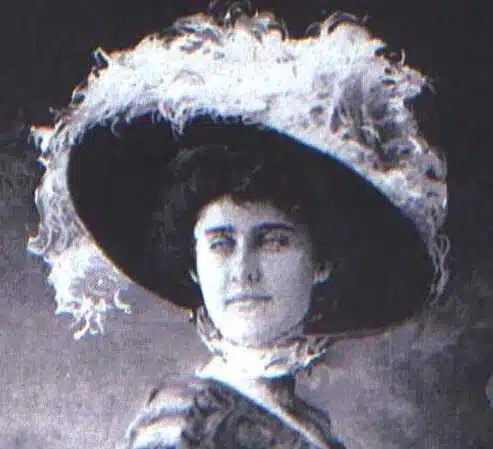
Edith Mary Evans (8 February 1888 – 14 October 1976) was an English actress. She was best known for her work on the West End stage, though she also appeared in films at the beginning and towards the end of her career, earning three Academy Award nominations between 1964 and 1968.
Early Life and Education
Evans was born in Pimlico, London, the daughter of Edward Evans, a junior civil servant in the General Post Office, and Caroline Ellen Foster. She had one sibling, a brother who died at age four. She attended St Michael’s Church of England School in Pimlico before being apprenticed at fifteen in 1903 as a milliner. Though she loved the materials of the craft, she found herself unable to make two hats alike.
While working in a milliner’s shop in the City, she began attending drama classes in Victoria that evolved into an amateur performing group called the Streatham Shakespeare Players. She made her first stage appearance in October 1910, playing Viola in Twelfth Night.
Career and Achievements
In 1912, Evans was spotted by producer William Poel while playing Beatrice in Much Ado About Nothing. Poel cast her in her first professional role as Gautami in the 6th-century Hindu classic Sakuntalá in Cambridge that August, alongside the young Nigel Playfair. He subsequently cast her as Cressida in Troilus and Cressida in London and at Stratford-upon-Avon, though The Manchester Guardian critic found her diction inadequate.
Evans made her West End debut in George Moore’s Elizabeth Cooper in 1913 in a small maid’s role that drew praise: “In the very small part of a maid Miss Edith Evans made the success of the afternoon.” In January 1914 she made her professional Shakespearian debut as Gertrude in Hamlet. Moore secured her a year’s contract with the Royalty Theatre in Soho in 1914, where she played character roles in comedies alongside Gladys Cooper and Lynn Fontanne.
During the 1910s and 1920s, Evans appeared in several films: A Welsh Singer (1915), A Honeymoon for Three (1915), and East is East (1917). She then made no films for over thirty years. On stage, she toured in Shakespeare with Ellen Terry’s company in 1918, appeared in light comedy with the young Noël Coward in Polly With a Past (1921), and played five new Shavian roles including Lady Utterword in Heartbreak House (1921) and multiple roles in Back to Methuselah (1923). In 1922, J. T. Grein called her performance in Alfred Sutro’s The Laughing Lady “a personal triumph.”
Evans achieved wide public fame with her performance as Millamant in The Way of the World in 1924, when Nigel Playfair cast her in his Lyric Hammersmith revival of Congreve’s Restoration comedy. Critics responded with superlatives. James Agate declared, “Miss Edith Evans is the most accomplished of living and practising English actresses.” Arnold Bennett noted in his journals that this Millamant was the finest comedy performance he had ever seen. John Gielgud recalled it as “a unique and exquisite performance” in which she “took the town by storm.”
Over a stage career spanning sixty years, Evans played more than 100 roles in classics by Shakespeare, Congreve, Goldsmith, Sheridan, and Wilde, as well as plays by contemporary writers including Bernard Shaw, Enid Bagnold, Christopher Fry, and Noël Coward. She created roles in two Shaw plays: Orinthia in The Apple Cart (1929) and Epifania in The Millionairess (1940). She also appeared in the British premières of Heartbreak House (1921) and Back to Methuselah (1923).
Evans became widely known for portraying haughty aristocratic women, most famously as Lady Bracknell in The Importance of Being Earnest. Her elongated delivery of the line “A handbag” became synonymous with Oscar Wilde’s play. She also played Miss Western in the 1963 film of Tom Jones. By contrast, she played a downtrodden maid in The Late Christopher Bean (1933) and an eccentric, impoverished old woman in The Whisperers (1967). One of her most celebrated roles was Nurse in Romeo and Juliet, which she performed in four productions between 1926 and 1961.
Notable Events and Milestones
Evans’s career was marked by several defining performances. Her 1924 portrayal of Millamant launched her to stardom and established her as a leading actress of her generation. She created the role of Orinthia in Shaw’s The Apple Cart in 1929 and Epifania in The Millionairess in 1940. Her interpretation of Lady Bracknell in The Importance of Being Earnest became iconic, with her delivery of “A handbag” entering theatrical legend. Between 1964 and 1968, she received three Academy Award nominations, bringing her film work renewed prominence late in her career.
Awards and Honors
Evans received three Academy Award nominations between 1964 and 1968 for her film work. She was appointed Dame, a title reflecting her status as one of England’s greatest actresses.
Additional Resources
Edith Evans’s legacy as one of the finest English actresses of the twentieth century is documented extensively in theatrical archives and biographical sources. Readers seeking more detailed information about her performances, collaborations with major playwrights, and influence on British theatre can consult Wikipedia and other comprehensive theatrical histories.
Observer Voice is the one stop site for National, International news, Sports, Editor’s Choice, Art/culture contents, Quotes and much more. We also cover historical contents. Historical contents includes World History, Indian History, and what happened today. The website also covers Entertainment across the India and World.
Follow Us on Twitter, Instagram, Facebook, & LinkedIn

