

Major Business Revival: PM Modi and Trump Forge Key Deal Amidst Crisis

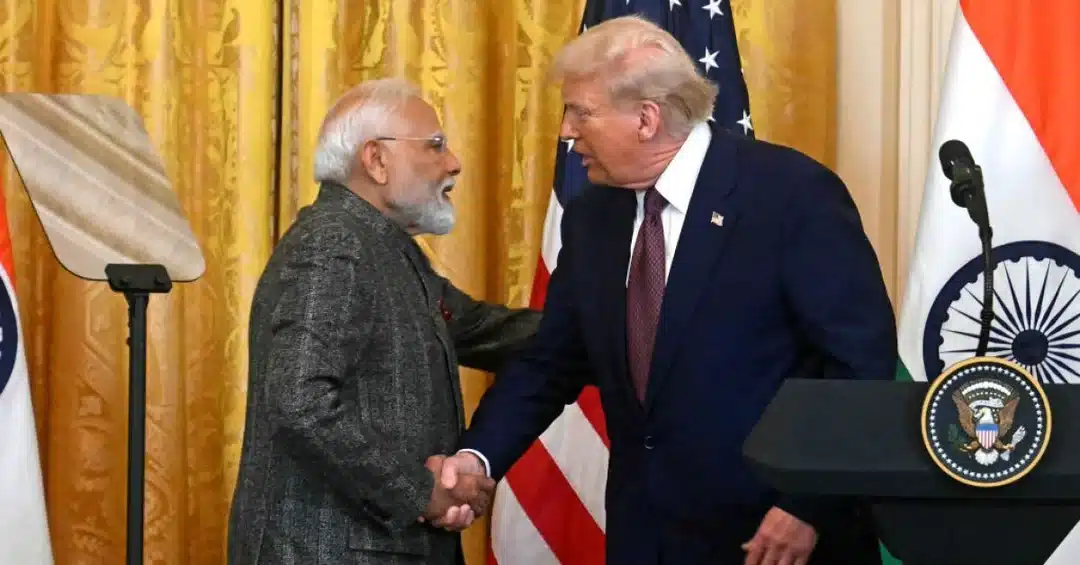
Until recently, a trade agreement between India and the United States seemed unlikely, with tensions surrounding tariffs and differing political agendas. However, recent developments indicate a potential breakthrough, as both nations work towards an interim agreement that could pave the way for a comprehensive Bilateral Trade Agreement. This shift not only positions India favorably against its regional competitors but also highlights the complexities of international trade negotiations amid domestic political pressures in the U.S.
Progress in Trade Negotiations
The atmosphere surrounding U.S.-India trade relations has shifted dramatically in recent months. Previously, the prospect of a trade deal appeared bleak, with India rejecting claims from former President Donald Trump regarding his influence over Operation Sindoor. U.S. Commerce Secretary Howard Lutnick had expressed skepticism about an early agreement, suggesting that “the train had left the station.” However, the recent framework for an interim agreement marks a significant step forward, promising positive implications for the broader bilateral relationship. This development not only enhances India’s competitive edge against countries like Indonesia, Bangladesh, and Vietnam but also contrasts sharply with Pakistan’s position, which has sought to align itself more closely with the U.S.
Benefits for India’s Economy
The proposed trade agreement is expected to benefit various sectors within India, particularly the micro, small, and medium enterprises (MSME) and labor-intensive industries such as apparel, leather, and marine products. The reduction of tariffs will likely stimulate growth and create opportunities for these sectors. Additionally, the agreement could serve as a source of embarrassment for Pakistan, which had prematurely celebrated its own trade prospects with the U.S. Negotiators from India have successfully navigated the complexities of U.S. demands, resisting pressure to allow imports of corn, soybeans, and genetically modified crops, which are politically sensitive in the U.S. as they are produced in regions that support Trump’s base.
Political Reactions and Criticism
Despite the positive outlook from the trade negotiations, the Indian government faces criticism from opposition parties regarding the concessions made in the agreement. Critics argue that the reduction of tariffs on certain agricultural products, such as dried distillers’ grains and red sorghum, does not equate to a fair trade-off when compared to cereals. Commerce and Industry Minister Piyush Goyal has defended the agreement, highlighting the demand for these imports from the animal husbandry sector. Furthermore, while concerns have been raised about potential future concessions to U.S. agricultural products, the agreement also includes provisions for increased access for Indian goods in the U.S. market.
Strategic Implications for India
The trade agreement is poised to eliminate the uncertainty that has clouded U.S.-India relations, providing India with a stronger position in the global diplomatic arena. At a recent press conference, Minister Goyal hinted at the strategic nature of the agreement, particularly in relation to China, stating, “Sajhne wale samajh gaye” (the intelligent will understand). This statement underscores India’s intent to strengthen its economic security and supply chain resilience in the face of non-market policies from third parties. As both countries aim to increase trade volume to $500 billion by 2031, the agreement represents a crucial step in fostering a more robust economic partnership.
Observer Voice is the one stop site for National, International news, Sports, Editor’s Choice, Art/culture contents, Quotes and much more. We also cover historical contents. Historical contents includes World History, Indian History, and what happened today. The website also covers Entertainment across the India and World.
Follow Us on Twitter, Instagram, Facebook, & LinkedIn

