

Samsung Galaxy Z TriFold vs Huawei Mate XTs: A Comparison of Design, Display, and Performance

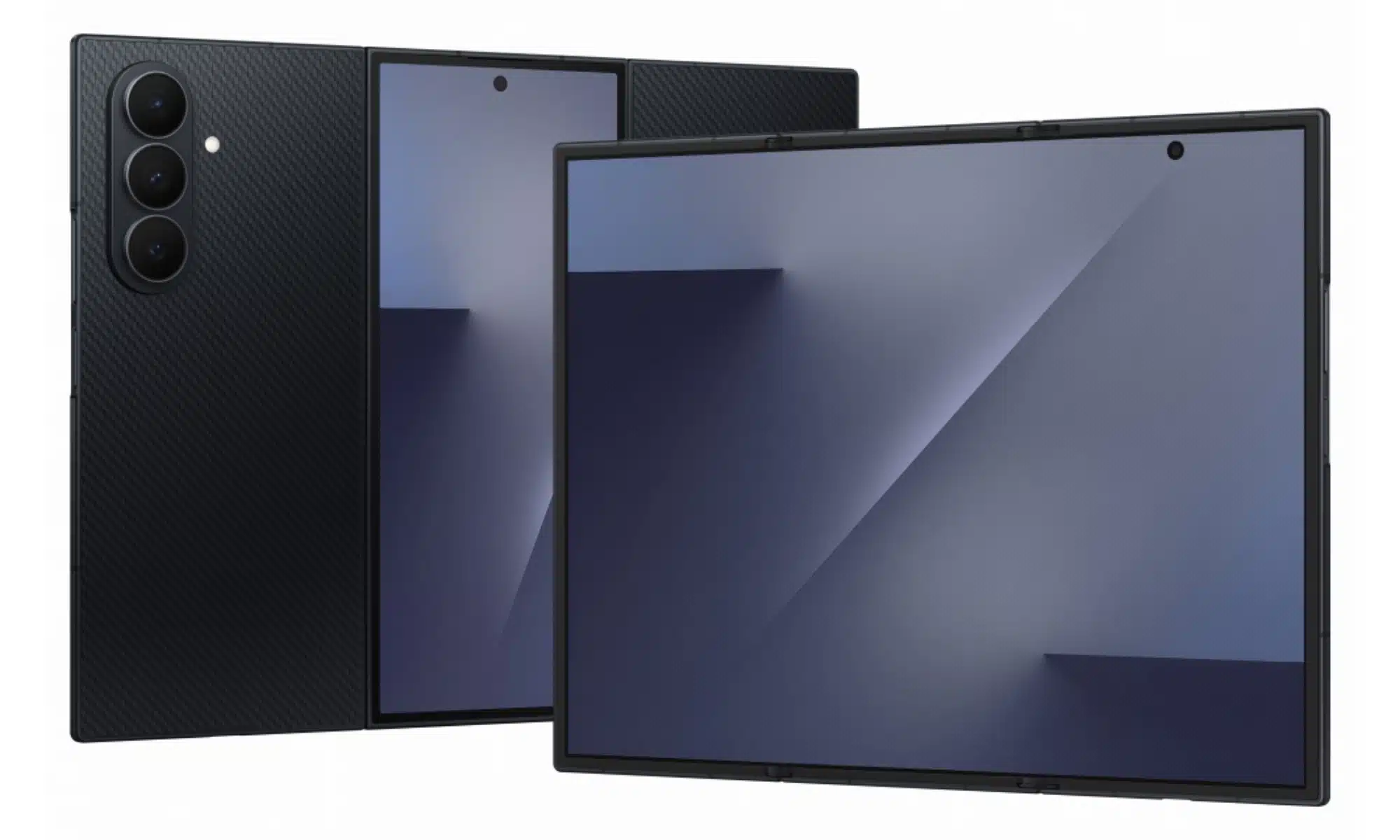
Samsung has launched its latest innovation in the foldable smartphone market, the Galaxy Z TriFold, which boasts a unique design featuring two hinges and three interconnected displays. This device aims to provide a tablet-like experience in a compact form, catering to users seeking enhanced productivity and multitasking capabilities. Initially set to debut in South Korea on December 12, the Galaxy Z TriFold will subsequently roll out to other regions, including China, Taiwan, Singapore, the UAE, and the United States. As Samsung enters a competitive landscape, it faces off against Huawei’s established Mate XTs, which have already made waves in the tri-fold category.
Design and Build Quality
The Samsung Galaxy Z TriFold showcases a sophisticated inward multi-fold design that effectively protects its main display. It features Samsung’s advanced Armour FlexHinge system, which incorporates two differently sized hinges and a dual-rail structure. This design ensures smoother folding and minimizes gaps, enhancing the overall user experience. The device is constructed with a titanium hinge housing and an Advanced Armour Aluminium frame, providing both durability and stability. Samsung has implemented rigorous quality control measures, including CT scanning and laser measurement, to guarantee precise assembly. Additionally, the Galaxy Z TriFold supports dual SIM functionality, boasts an IP48 rating for dust and water resistance, and operates on Android 16-based OneUI 8.
In contrast, the Huawei Mate XTs maintains a tri-fold design characterized by parallel geometric embossing that enhances structural integrity. Weighing in at 298 grams, it is available in White and Purple color options, featuring a leather-like finish. The device employs a Tiangong dual-track hinge system that ensures smooth operation. Furthermore, the Mate XTs integrates a multi-antenna design and satellite communication capabilities, allowing for reliable connectivity even in areas with weak network signals. This device also supports various screen modes, including single, dual, and triple-screen configurations, offering users flexibility in their usage.
Display Features
The Galaxy Z TriFold is equipped with an impressive 10-inch inner QXGA+ Dynamic AMOLED 2X display, featuring a resolution of 269 pixels per inch (ppi), a 120Hz adaptive refresh rate, and a peak brightness of up to 1,600 nits. Its cover display measures 6.5 inches, with Full-HD+ resolution, 422ppi, a 120Hz adaptive refresh rate, and a peak brightness of 2,600 nits. Both displays are designed to cover 100% of the DCI-P3 color gamut, ensuring vibrant and accurate colors. The cover display is protected by Corning Gorilla Glass Ceramic 2, while the rear panel is reinforced with Ceramic-Glass Fibre for added durability.
On the other hand, the Huawei Mate XTs features a versatile display setup, including a 6.4-inch single display with a resolution of 2232×1008 pixels, a 7.9-inch double display at 2232×2048 pixels, and a 10.2-inch triple display with a resolution of 2232×3184 pixels. Utilizing OLED LTPO technology, the Mate XTs claims to support 1.07 billion colors, a P3 wide color gamut, 1440Hz PWM dimming, and a maximum touch response rate of 240Hz. Users can operate the device in both vertical and horizontal orientations, seamlessly switching between screen modes as needed. Additionally, Huawei offers stylus support with the M-Pencil 3, enhancing usability for presentations and media navigation.
Camera Capabilities
The camera setup on the Galaxy Z TriFold is impressive, featuring a triple rear camera system that includes a 200MP primary sensor with optical image stabilization (OIS), a 12MP ultrawide lens, and a 10MP telephoto lens with OIS and up to 30x digital zoom. For selfies, the device is equipped with two 10MP cameras, one for the cover display and another for the inner screen, catering to various photography needs. In comparison, the Huawei Mate XTs boasts a quad-lens rear camera system that includes a 50MP main camera with variable aperture and OIS, a 40MP ultrawide lens, a 12MP periscope sensor with OIS, and a 1.5MP multi-spectral sensor. This setup supports 5.5x optical zoom and 50x digital zoom, providing users with versatile photography options. The front of the device features an 8MP ultrawide lens, ensuring high-quality selfies and video calls.
Performance and Battery Life
Under the hood, the Samsung Galaxy Z TriFold is powered by the Snapdragon 8 Elite for Galaxy chipset, paired with up to 16GB of RAM and 1TB of storage. This configuration is designed to handle multitasking, smooth transitions in the foldable UI, and demanding applications with ease.
Conversely, the Huawei Mate XTs runs on the Kirin 9020 chipset and HarmonyOS, which Huawei claims offers a performance improvement of 20-36% over its predecessor. This device supports seamless switching between different screen modes, stylus input, and multitasking without compromising performance. Both devices are equipped with a 5,600mAh battery. The Galaxy Z TriFold supports 45W wired and 15W wireless fast charging, while the Mate XTs offers faster charging options with 66W wired fast charging, 50W wireless charging, and 5W wired reverse charging.
Observer Voice is the one stop site for National, International news, Sports, Editor’s Choice, Art/culture contents, Quotes and much more. We also cover historical contents. Historical contents includes World History, Indian History, and what happened today. The website also covers Entertainment across the India and World.

